CD369 (Clec7a, Dectin-1) Monoclonal Antibody (15E2), Functional Grade, eBioscience™, Invitrogen™
Manufacturer: Fischer Scientific
Select a Size
| Pack Size | SKU | Availability | Price |
|---|---|---|---|
| Each of 1 | 16-985-682-Each-of-1 | In Stock | ₹ 21,271.00 |
16-985-682 - Each of 1
In Stock
Quantity
1
Base Price: ₹ 21,271.00
GST (18%): ₹ 3,828.78
Total Price: ₹ 25,099.78
Antigen
CD369 (Clec7a, Dectin-1)
Classification
Monoclonal
Concentration
1 mg/mL
Formulation
PBS with no preservative; pH 7.2
Gene Accession No.
Q9BXN2
Gene Symbols
Clec7a
Purification Method
Affinity chromatography
Regulatory Status
RUO
Gene ID (Entrez)
64581
Content And Storage
4° C
Form
Liquid
Applications
Functional Assay
Clone
15E2
Conjugate
Functional Grade
Gene
Clec7a
Gene Alias
Beta-glucan receptor; beta-GR; BGR; CANDF4; CD369; CLEC7A; Clec7b; CLECSF12; C-type (calcium dependent, carbohydrate recognition domain) lectin, superfamily member 12; C-type (calcium dependent, carbohydrate-recognition domain) lectin, superfamily member 12; C-type lectin domain family 7 member A; C-type lectin domain family 7, member A; C-type lectin superfamily member 12; DC-associated C-type lectin 1; DECTIN1; dectin-1; Dendritic cell-associated C-type lectin 1; dendritic cell-associated C-type lectin-1; lectin-like receptor 1; RGD1565140; SCARE2; UNQ539/PRO1082
Host Species
Mouse
Quantity
100 μg
Primary or Secondary
Primary
Target Species
Human, Non-human Primate
Product Type
Antibody
Isotype
IgG2a κ
Related Products


Description
- Description: This 15E2 monoclonal antibody reacts with human and non-human primate CD369, which is also known as the Dectin-1 or beta-glucan receptor or CLEC7A
- CD369 is expressed predomitly on monocytes, macrophages, and dendritic cells
- Moreover, this receptor can also be detected on neutrophils and lymphocytes, as well as induced by cytokines such as IL-4 or LPS
- In humans, CD369 exists as two isoforms that arise due to alternative splicing
- CD369 binds beta-1,3-glucan and plays an important role in activating signal transduction involved in the innate immune response to fungal and mycobacterial infections
- Studies have also shown the involvement of CD369 in dendritic cell activation
- The 15E2 monoclonal antibody has been reported to recognize both isoforms of CD369 and activate dendritic cells
- It does not crossreact to mouse CD369
- Applications Reported: The 15E2 antibody has been reported to activate dendritic cells
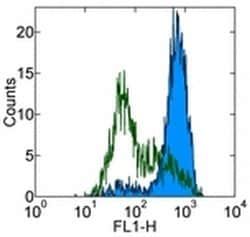
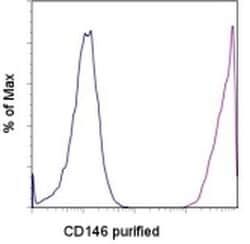
- Applications Tested: This 15E2 antibody has been tested by flow cytometric analysis of normal human peripheral blood cells
- This can be used at less than or equal to 1 μg per test
- A test is defined as the amount (μg) of antibody that will stain a cell sample in a final volume of 100 μL
- Cell number should be determined empirically but can range from 10^5 to 10^8 cells/test
- It is recommended that the antibody be carefully titrated for optimal performance in the assay of interest
- Endotoxin: Less than 0
- CLEC7A, also known as dectin-1, is a member of the C-type lectin/C-type lectin-like domain (CTL/CTLD) superfamily and is predominantly expressed on myeloid cells
- It is a small glycoprotein type II membrane receptor with an extracellular C-type lectin-like domain fold and a cytoplasmic domain with an immunoreceptor tyrosine-based activation motif (ITAM)
- CLEC7A functions as a pattern-recognition receptor that recognizes a variety of beta-1,3-linked and beta-1,6-linked glucans from fungi and plants, and in this way plays a role in innate immune response
- Upon fungal exposure, CLEC7A activates Syk tyrosine kinase, triggering a massive oxidative burst through the formation of reactive oxygen species.