FAP Monoclonal Antibody (D3), Invitrogen™
Mouse Monoclonal Antibody
Manufacturer: Fischer Scientific
The price for this product is unavailable. Please request a quote
Antigen
FAP
Concentration
1 mg/mL
Classification
Monoclonal
Form
Liquid
Regulatory Status
RUO
Formulation
PBS with 50% glycerol and 0.05% Proclin 300, pH 7.4
Gene Alias
170 kDa melanoma membrane-bound gelatinase, Antiplasmin-cleaving enzyme FAP, soluble form, APCE, Dipeptidyl peptidase FAP, DPPIV, Fap, FAPA, FAPalpha, fibroblast activation protein, fibroblast activation protein alpha, fibroblast activation protein, alpha, gelatine degradation protease FAP, Integral membrane serine protease, post-proline cleaving enzyme, Prolyl endopeptidase FAP, seprase, Serine integral membrane protease, SIMP, Surface-expressed protease
Gene Symbols
FAP
Isotype
IgG2b κ
Purification Method
Protein A/G
Gene
FAP
Clone
D3
Applications
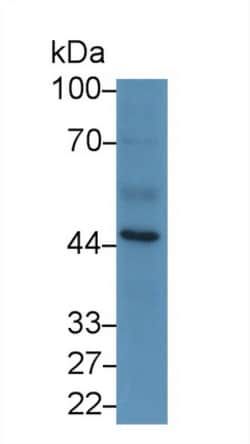
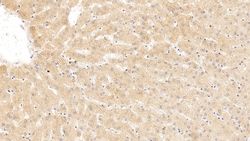
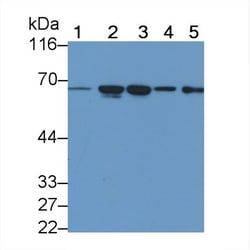
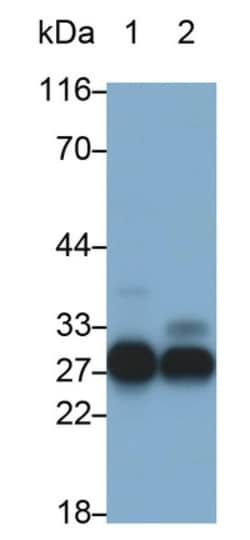
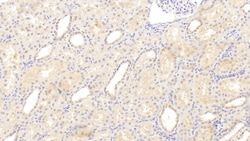
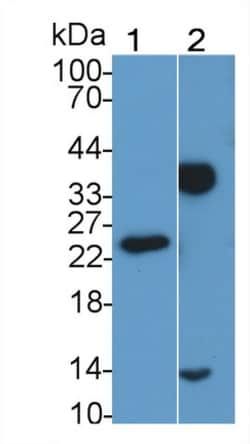
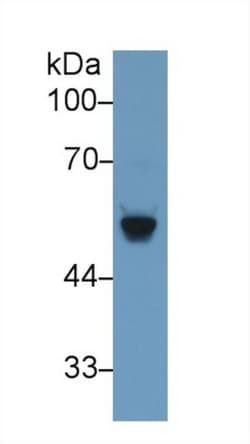
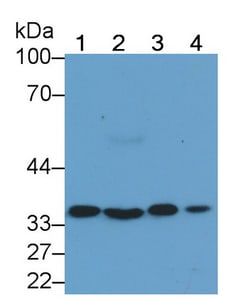
Immunocytochemistry, Immunohistochemistry (Paraffin), Western Blot
Conjugate
Unconjugated
Host Species
Mouse
Target Species
Human, Porcine
Gene Accession No.
Q12884
Gene ID (Entrez)
100736572, 2191
Immunogen
Recombinant Human FAPa protein, Ile523-Asp760 (Accession #Q12884)
Primary or Secondary
Primary
Content And Storage
Store at 4°C short term. For long term storage, store at -20°C, avoiding freeze/thaw cycles.
Related Products
Description
- The protein encoded by this gene is a homodimeric integral membrane gelatinase belonging to the serine protease family
- It is selectively expressed in reactive stromal fibroblasts of epithelial cancers, granulation tissue of healing wounds, and malignant cells of bone and soft tissue sarcomas
- This protein is thought to be involved in the control of fibroblast growth or epithelial-mesenchymal interactions during development, tissue repair, and epithelial carcinogenesis.