TMPRSS2 Monoclonal Antibody (C1), Invitrogen™
Mouse Monoclonal Antibody
Manufacturer: Fischer Scientific
The price for this product is unavailable. Please request a quote
Antigen
TMPRSS2
Concentration
1 mg/mL
Classification
Monoclonal
Form
Liquid
Regulatory Status
RUO
Formulation
PBS with 50% glycerol and 0.05% Proclin 300, pH 7.4
Gene Alias
D16Ertd61e, EC 3.4.219, epitheliasin, FLJ41954, MGC6821, Plasmic transmembrane protein X, PP9284, PRSS10, Serine protease 10, Tmprss2, TMPS2, Transmembrane protease serine 2, Transmembrane protease serine 2 catalytic chain, Transmembrane protease serine 2 non-catalytic chain, transmembrane protease, serine 2
Gene Symbols
TMPRSS2
Isotype
IgG2a κ
Purification Method
Protein A/G
Gene
TMPRSS2
Clone
C1
Applications
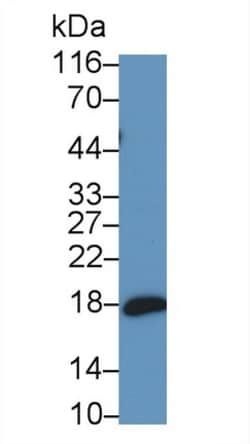
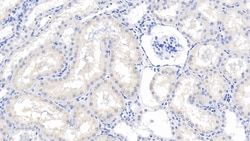
Immunocytochemistry, Immunohistochemistry (Paraffin), Western Blot
Conjugate
Unconjugated
Host Species
Mouse
Target Species
Human
Gene Accession No.
O15393
Gene ID (Entrez)
7113
Immunogen
Recombinant Human TMPRSS2 protein, Ser284-Gly492 (Accession #O15393)
Primary or Secondary
Primary
Content And Storage
Store at 4°C short term. For long term storage, store at -20°C, avoiding freeze/thaw cycles.
Related Products
Description
- TMPRSS2 is a protein that belongs to the serine protease family
- The protein contains a type II transmembrane domain, a receptor class A domain, a scavenger receptor cysteine-rich domain and a protease domain
- Serine proteases are known to be involved in many physiological and pathological processes
- Its gene was demonstrated to be up-regulated by androgenic hormones in prostate cancer cells and down-regulated in androgen-independent prostate cancer tissue
- The protease domain of this protein is thought to be cleaved and secreted into cell media after autocleavage.