S100A12 Monoclonal Antibody (C7), Invitrogen™
Mouse Monoclonal Antibody
Manufacturer: Fischer Scientific
The price for this product is unavailable. Please request a quote
Antigen
S100A12
Concentration
1 mg/mL
Classification
Monoclonal
Form
Liquid
Regulatory Status
RUO
Formulation
PBS with 50% glycerol and 0.05% Proclin 300, pH 7.4
Gene Alias
CAAF1, CAGC, Calcitermin, calcium-binding protein in amniotic fluid 1, calgranulin C, calgranulin-C, CGRP, EN RAGE, ENRAGE, EN-RAGE, Extracellular newly identified RAGE-binding protein, migration inhibitory factor-related protein 6, MRP6, MRP-6, Neutrophil S100 protein, p6, Protein S100 A12, protein S100-A12, S100 calcium binding protein A12, S100 calcium-binding protein A12, S100 calcium-binding protein A12 (calgranulin C), S100A12
Gene Symbols
S100A12
Isotype
IgG1 κ
Purification Method
Protein A/G
Gene
S100A12
Clone
C7
Applications
Immunocytochemistry, Immunohistochemistry (Paraffin), Western Blot
Conjugate
Unconjugated
Host Species
Mouse
Target Species
Human
Gene Accession No.
P80511
Gene ID (Entrez)
6283
Immunogen
Recombinant Human S100A12 protein, Met1-Glu92 (Accession #P80511)
Primary or Secondary
Primary
Content And Storage
Store at 4°C short term. For long term storage, store at -20°C, avoiding freeze/thaw cycles.
Related Products
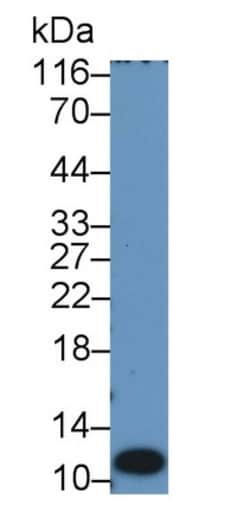
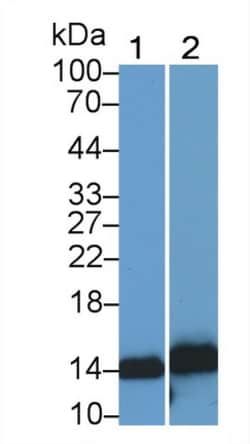
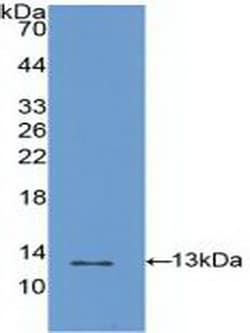
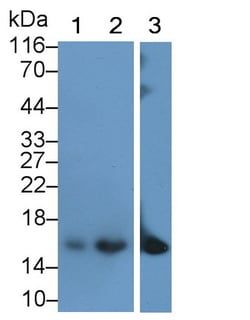
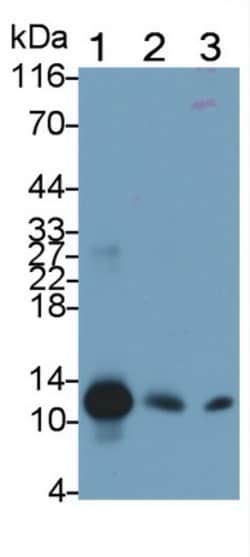
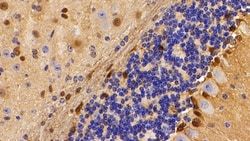
Description
- S100A12 is a member of the S100 family of proteins containing 2 EF-hand calcium-binding motifs
- S100 proteins are localized in the cytoplasm and/or nucleus of a wide range of cells, and involved in the regulation of a number of cellular processes such as cell cycle progression and differentiation
- S100A12 is proposed to be involved in specific calcium-dependent signal transduction pathways and its regulatory effect on cytoskeletal components may modulate various neutrophil activities
- S100A12 is also a ligand for RAGE
- Interaction with RAGE on mononuclear phagocytes, lymphocytes and endothelium triggers cellular activation
- Nuclear factor kappa B, a key transcription factor for inflammatory events, is activated by S100A12/RAGE
- S100A12 has also been shown to have anti-microbial properties.