CD85k (ILT3) Monoclonal Antibody (ZM4.1), PE-Cyanine7, eBioscience™, Invitrogen™
Manufacturer: Invitrogen
Select a Size
| Pack Size | SKU | Availability | Price |
|---|---|---|---|
| Each of 1 | 25-513-942-Each-of-1 | In Stock | ₹ 34,710.00 |
25-513-942 - Each of 1
In Stock
Quantity
1
Base Price: ₹ 34,710.00
GST (18%): ₹ 6,247.80
Total Price: ₹ 40,957.80
Antigen
CD85k (ILT3)
Classification
Monoclonal
Concentration
5 μL/Test
Formulation
PBS with 0.2% BSA and 0.09% sodium azide, pH 7.2
Gene Accession No.
Q8NHJ6
Gene Symbols
LILRB4
Purification Method
Affinity chromatography
Regulatory Status
RUO
Gene ID (Entrez)
11006
Content And Storage
4° C, store in dark, DO NOT FREEZE!
Form
Liquid
Applications
Flow Cytometry
Clone
ZM4.1
Conjugate
PE-Cyanine7
Gene
LILRB4
Gene Alias
CD85 antigen-like family member K, CD85K, glycoprotein 49 B, glycoprotein 49b, gp49, Gp49b, GP49B2, HM18, ILT3, ILT-3, Immunoglobulin-like transcript 3, leucocyte Ig-like receptor B4, leukocyte immunoglobulin like receptor B4, leukocyte immunoglobulin-like receptor 5, Leukocyte immunoglobulin-like receptor subfamily B member 4, leukocyte immunoglobulin-like receptor, subfamily B (with TM and ITIM domains), member 4, leukocyte immunoglobulin-like receptor, subfamily B, member 4, leukocyte surface receptor, Lilrb4, LIR5, LIR-5, mast cell surface glycoprotein Gp49B, Monocyte inhibitory receptor HM18
Host Species
Mouse
Quantity
100 Tests
Primary or Secondary
Primary
Target Species
Human
Product Type
Antibody
Isotype
IgG1 κ
Related Products



Description
- Description: The monoclonal antibody ZM4.1 recognizes ILT3, also known as CD85k
- ILT3 is a member of the large family of ILT molecules (Immunologulin-like Transcripts, Leucocyte Ig-like Receptors (LIRs) and Monocyte/Macrophage Ig-like Receptors (MIRs)
- ILT3 is a 60kDa transmembrane protein with two Ig domains and ITIMs
- Expression is found on monocytes, macrophages, and dendritic cells
- High levels of ILT3 expression is also found on plasmacytoid dendritic cells (pDCs)
- ILT3 expression by DCs has been shown to be required to induce Regulatory Tcells (tregs)
- Addition of ZM4.1, like ZM3.8, blocks the suppressive function of the Tregs in in vitro culture systems with allogenic DC's
- Applications Reported: This ZM4.1 antibody has been reported for use in flow cytometric analysis
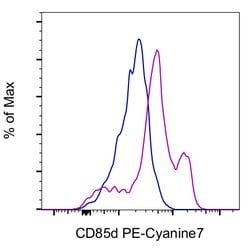
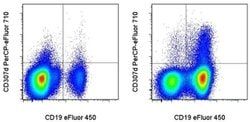
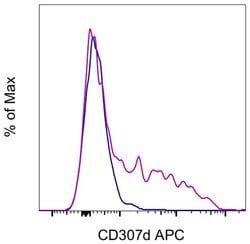
- Applications Tested: This ZM4.1 antibody has been pre-diluted and tested by flow cytometric analysis of normal human peripheral blood cells
- This may be used at 5 μL (0.5 μg) per test
- A test is defined as the amount (μg) of antibody that will stain a cell sample in a final volume of 100 μL
- Cell number should be determined empirically but can range from 10^5 to 10^8 cells/test
- Light sensitivity: This tandem dye is sensitive to photo-induced oxidation
- Please protect this vial and stained samples from light
- Fixation: Samples can be stored in IC Fixation Buffer (Product No
- This gene is a member of the leukocyte immunoglobulin-like receptor (LIR) family, which is found in a gene cluster at chromosomal region 19q13.4
- The encoded protein belongs to the subfamily B class of LIR receptors which contain two or four extracellular immunoglobulin domains, a transmembrane domain, and two to four cytoplasmic immunoreceptor tyrosine-based inhibitory motifs (ITIMs)
- The receptor is expressed on immune cells where it binds to MHC class I molecules on antigen-presenting cells and transduces a negative signal that inhibits stimulation of an immune response
- The receptor can also function in antigen capture and presentation
- It is thought to control inflammatory responses and cytotoxicity to help focus the immune response and limit autoreactivity
- Multiple transcript variants encoding different isoforms have been found for this gene
- [provided by RefSeq, Jul 2008].