Phospho-Progesterone Receptor (Ser190) Monoclonal Antibody (1154), Invitrogen™
Manufacturer: Invitrogen
Select a Size
| Pack Size | SKU | Availability | Price |
|---|---|---|---|
| Each of 1 | 37-820-0-Each-of-1 | In Stock | ₹ 40,584.00 |
37-820-0 - Each of 1
In Stock
Quantity
1
Base Price: ₹ 40,584.00
GST (18%): ₹ 7,305.12
Total Price: ₹ 47,889.12
Antigen
Phospho-Progesterone Receptor (Ser190)
Classification
Monoclonal
Conjugate
Unconjugated
Gene
PGR
Gene Alias
9930019P03Rik; BB114106; ENSMUSG00000074510; LOW QUALITY PROTEIN: progesterone receptor; NR3C3; Nuclear receptor subfamily 3 group C member 3; p4 receptor; PGR; pot. alt. progesterone receptor; putative; PR; PR-A; PR-B; Progesterone receptor; progesterone receptor A; progesterone-receptor; putative form B; steroid hormone receptor; testicular progesterone receptor; unnamed protein product
Host Species
Mouse
Purification Method
Protein G
Regulatory Status
RUO
Gene ID (Entrez)
5241
Content And Storage
-20° C, Avoid Freeze/Thaw Cycles
Form
Liquid
Applications
Immunocytochemistry, Immunohistochemistry, Western Blot
Clone
1154
Formulation
0.01M HEPES with 0.15M NaCl, 100μg/mL BSA, 50% glycerol and no preservative; pH 7.5
Gene Accession No.
P06401
Gene Symbols
PGR
Immunogen
Synthetic phospho peptide derived from a region of the human Progesterone Receptor (hPR) protein surrounding the phosphorylated Ser190 residue.
Quantity
100 μL
Primary or Secondary
Primary
Target Species
Human
Product Type
Antibody
Isotype
IgG1
Related Products



Description
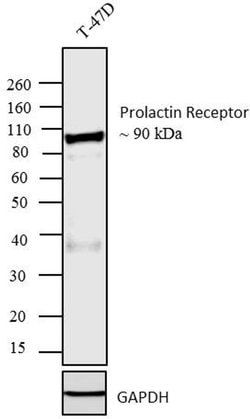
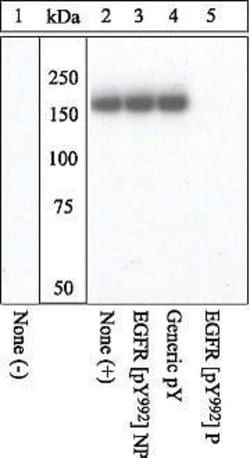
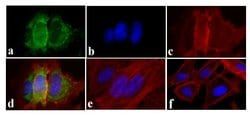
- 37-8200 detects Phospho-Progesterone Receptor in Human samples
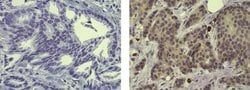
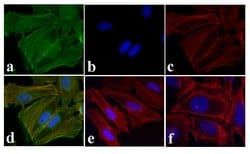
- 37-8200 has been successfully used in western blot, immunofluorescence and immunohistochemistry in human samples
- Phospho-Progesterone Receptor (Ser 190) antibody detects both progesterone receptor A and B forms when phosphorylated at Ser26 and Ser190, respectively
- The progesterone receptor (PR) is a member of the steroid family of nuclear receptors
- The PR mediates the physiological effects of progesterone, which plays a central role in reproductive events associated with the establishment and maintenance of pregnancy
- PR is found as a 94 kDa protein (Form A) or a 120 kDa protein (Form B) due to the use of alternative translation initiation sites
- PR-B is the transcriptionally active form and is responsible for activating genes for the maintenance of the endometrium, maintenance of pregnancy, and inhibition of ovulation
- PR-A is identical to PR-B except for a 165 amino acid deletion at the N-terminus
- This deletion exposes a 140 amino acid inhibitory domain (ID) that acts as a repressor of steroid hormone transcriptional activity
- In its inactive state, PgR forms a multiprotein complex which includes heat shock proteins and immunophins
- Upon binding of progesterone hormone to its receptor, there is a conformational change that allows dimerization and binding of the receptor to progesterone response elements (PRE) sequences, resulting in activated transcription
- A Null mutation in the PGR gene leads to pleiotrophic reproductive abnormalities.