Phospho-SMAD2 (Ser465, Ser467) Polyclonal Antibody, Invitrogen™
Manufacturer: Invitrogen
Select a Size
| Pack Size | SKU | Availability | Price |
|---|---|---|---|
| Each of 1 | 44-244-G-Each-of-1 | In Stock | ₹ 44,500.00 |
44-244-G - Each of 1
In Stock
Quantity
1
Base Price: ₹ 44,500.00
GST (18%): ₹ 8,010.00
Total Price: ₹ 52,510.00
Antigen
Phospho-SMAD2 (Ser465, Ser467)
Classification
Polyclonal
Formulation
Dulbecco's PBS with 1mg/mL BSA and 0.05% sodium azide; pH 7.3
Gene Accession No.
Q15796, Q62432
Gene Symbols
SMAD2
Immunogen
The antiserum was produced against a chemically synthesized phosphopeptide derived from a region of human Smad2 that contains serines 465 and 467. The sequence is conserved in mouse and rat.
Quantity
100 μL
Primary or Secondary
Primary
Target Species
Human, Mouse
Product Type
Antibody
Isotype
IgG
Applications
ChIP Assay, Immunocytochemistry, Immunohistochemistry (Paraffin), Western Blot
Conjugate
Unconjugated
Gene
SMAD2
Gene Alias
7120426M23Rik; EGK_09664; hMAD-2; hSMAD2; JV18; JV18-1; MAD; MAD homolog 2; Mad protein homolog; Madh2; Madr2; Mad-related protein 2; MGC22139; MGC34440; mMad2; mother against DPP homolog 2; mothers against decapentaplegic homolog 2; Mothers against decapentaplegic-like protein 2; mothers against DPP homolog 2; pSMAD2; Sma- and Mad-related protein 2; SMAD; SMAD 2; SMAD family member 2; SMAD, mothers against DPP homolog 2; Smad2; Smad-2; Smad2Deltaexon3
Host Species
Rabbit
Purification Method
Antigen affinity chromatography
Regulatory Status
RUO
Gene ID (Entrez)
17126, 4087
Content And Storage
-20°C
Form
Liquid
Related Products
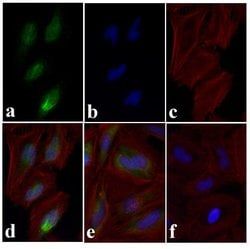
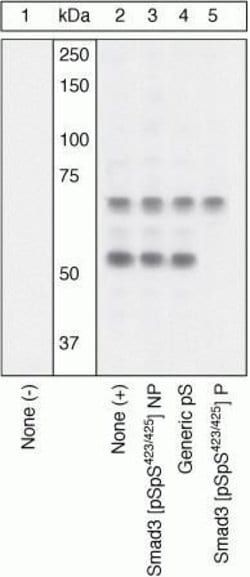
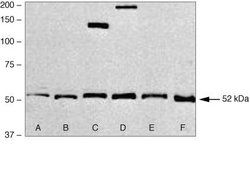
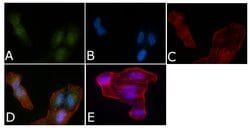
Description
- SMAD2 (MADH2, MAD2) regulates multiple cellular processes, such as cell proliferation, apoptosis, and differentiation
- SMAD2 interacts with the TGF-beta receptors through its interaction with the SMAD anchor for receptor activation into the nucleus is a central event in TGF beta signaling
- Phosphorylation of threonine 8 in the calmodulin-binding region of the MH1 domain by extracellular signal regulated kinase 1 (ERK1) enhances SMAD2 transcriptional activity, which is negatively regulated by calmodulin
- In response to the TGF-beta signal, SMAD2 is phosphorylated by the TGF-beta receptors
- The phosphorylation induces the dissociation of this protein with SARA and the association with the family member SMAD4
- The association with SMAD4 is important for the translocation of this protein into the nucleus, where it binds to target promoters and forms a transcription repressor complex with other cofactors
- SMAD2 can also be phosphorylated by activin type 1 receptor kinase, and mediates the signal from the activin
- Alternatively spliced transcript variants encoding the SMAD2 protein have been observed.