50-155-6960
Sp1 Rabbit anti-Human, Mouse, Polyclonal, Bethyl Laboratories
Manufacturer: Bethyl Laboratories, Inc
Select a Size
| Pack Size | SKU | Availability | Price |
|---|---|---|---|
| Each of 1 | 50-155-6960-Each-of-1 | In Stock | ₹ 43,546.81 |
50-155-6960 - Each of 1
In Stock
Quantity
1
Base Price: ₹ 43,546.81
GST (18%): ₹ 7,838.426
Total Price: ₹ 51,385.236
Antigen
Sp1
Classification
Polyclonal
Conjugate
Unconjugated
Gene
SP1
Gene Alias
SP1; Sp1 transcription factor ; HGNC:11205
Host Species
Rabbit
Purification Method
Antigen affinity chromatography
Regulatory Status
RUO
Gene ID (Entrez)
20683, 6667
Content And Storage
4° C
Form
Liquid
Applications
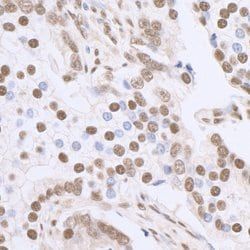
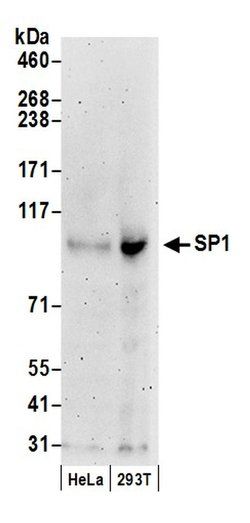
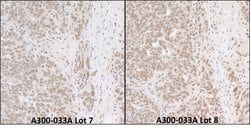
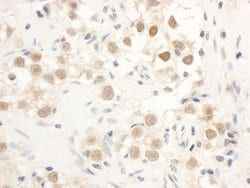
Immunohistochemistry, Immunoprecipitation, Western Blot
Concentration
1 mg/ml
Formulation
phosphate, tris citrate with 0.09% sodium azide; pH 7-8
Gene Accession No.
O89090, P08047
Gene Symbols
SP1
Immunogen
Between 700 and 740
Quantity
100 μL
Primary or Secondary
Primary
Target Species
Human, Mouse
Product Type
Antibody
Isotype
IgG
Related Products




Description
- The recommended shelf life for this product is 1 year from date of receipt
- Application Note: For IHC, epitope retrieval with citrate buffer pH 6.0 is recommended for FFPE tissue sections
- Based on 100% sequence identity, this antibody is predicted to react with Rat Transcription factor that can activate or repress transcription in response to physiological and pathological stimuli
- Binds with high affinity to GC-rich motifs and regulates the expression of a large number of genes involved in a variety of processes such as cell growth, apoptosis, differentiation and immune responses
- Highly regulated by post-translational modifications (phosphorylations, sumoylation, proteolytic cleavage, glycosylation and acetylation)
- Binds also the PDGFR-alpha G-box promoter
- May have a role in modulating the cellular response to DNA damage
- Implicated in chromatin remodeling
- Plays a role in the recruitment of SMARCA4/BRG1 on the c-FOS promoter
- Plays an essential role in the regulation of FE65 gene expression.