50-157-1622
USP10 Polyclonal Antibody, Bethyl Laboratories
Manufacturer: Fischer Scientific
Select a Size
| Pack Size | SKU | Availability | Price |
|---|---|---|---|
| Each of 1 | 50-157-1622-Each-of-1 | In Stock | ₹ 12,384.35 |
50-157-1622 - Each of 1
In Stock
Quantity
1
Base Price: ₹ 12,384.35
GST (18%): ₹ 2,229.183
Total Price: ₹ 14,613.533
Antigen
USP10
Classification
Polyclonal
Formulation
TBS with 0.1% BSA and 0.09% sodium azide
Gene Accession No.
Q14694
Gene Symbols
USP10
Immunogen
Between 50 and 100
Quantity
10 μL
Primary or Secondary
Primary
Target Species
Human
Product Type
Antibody
Isotype
IgG
Applications
Immunohistochemistry
Conjugate
Unconjugated
Gene
USP10
Gene Alias
UBPO; deubiquitinating enzyme 10; ubiquitin carboxyl-terminal hydrolase 10; ubiquitin specific protease 10; ubiquitin thioesterase 10; ubiquitin thiolesterase 10; ubiquitin-specific-processing protease 10
Host Species
Rabbit
Purification Method
Antigen affinity chromatography
Regulatory Status
RUO
Gene ID (Entrez)
9100
Content And Storage
4° C
Form
Liquid
Related Products
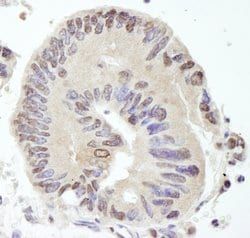

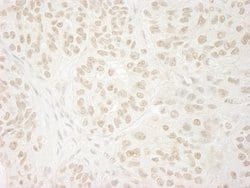
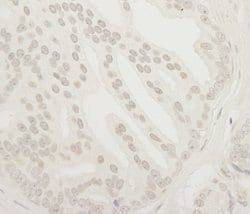

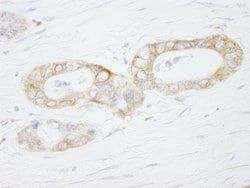
Description
- The recommended shelf life for this product is 1 year from date of receipt
- Based on 100% sequence identity, this antibody is predicted to react with Orangutan, Monkey, Northern white-cheeked gibbon, Crab-eating macaque and White-tufted-ear marmos Ubiquitin is a highly conserved protein that is covalently linked to other proteins to regulate their function and degradation
- This gene encodes a member of the ubiquitin-specific protease family of cysteine proteases
- The enzyme specifically cleaves ubiquitin from ubiquitin-conjugated protein substrates
- The protein is found in the nucleus and cytoplasm
- It functions as a co-factor of the DNA-bound androgen receptor complex, and is inhibited by a protein in the Ras-GTPase pathway
- The human genome contains several pseudogenes similar to this gene.