50-166-2222
UNG Mouse anti-Human, Clone: OTI2C12, lyophilized, TrueMAB™
Manufacturer: OriGene
Select a Size
| Pack Size | SKU | Availability | Price |
|---|---|---|---|
| Each of 1 | 50-166-2222-Each-of-1 | In Stock | ₹ 60,342.00 |
50-166-2222 - Each of 1
In Stock
Quantity
1
Base Price: ₹ 60,342.00
GST (18%): ₹ 10,861.56
Total Price: ₹ 71,203.56
Antigen
UNG
Classification
Monoclonal
Conjugate
Unconjugated
Gene
UNG
Gene Alias
DGU, HIGM4, HIGM5, UDG, UNG1, UNG15, UNG2
Host Species
Mouse
Purification Method
Affinity Chromatography
Regulatory Status
RUO
Gene ID (Entrez)
7374
Content And Storage
-20° C, Avoid Freeze/Thaw Cycles
Form
Lyophilized
Applications
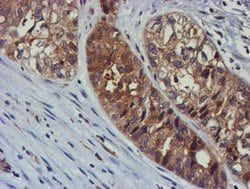
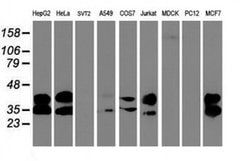
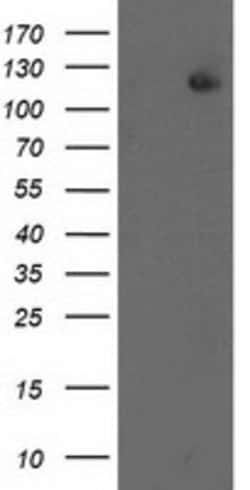
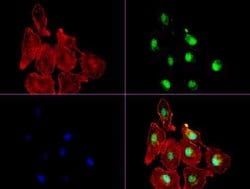
Immunocytochemistry, Immunofluorescence, Immunohistochemistry (Paraffin), Western Blot
Clone
OTI2C12
Formulation
PBS with 8% trehalose and no preservative; pH 7.3
Gene Accession No.
P13051
Gene Symbols
UNG
Immunogen
Full length human recombit protein of human UNG produced in HEK293T cell.
Quantity
100 μg
Primary or Secondary
Primary
Target Species
Human
Product Type
Antibody
Isotype
IgG2b
Related Products
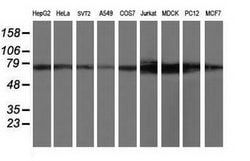
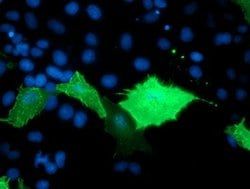

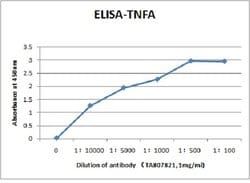
Description
- Reconstitute with PBS (pH 7.3) and recommend to perform another round of desalting process using Product No
- 7KMWCO The human UNG gene encodes both nuclear (UNG2) and mitochondrial (UNG1) forms of uracil-DNA glycosylase
- These forms are generated by alternative splicing and the use of two differentially regulated promoters, PA and PB
- The cDNAs for UNG1 and UNG2 are of similar size (2061 and 2058 bp, respectively) and as a result the corresponding mRNAs are not resolved as two species in gel electrophoresis
- Nuclear UNG2 differs from mitochondrial UNG1 in 44 amino acids of the N-terminal sequence that is not necessary for catalytic activity
- A major role of the UNG gene products is to repair mutagenic U:G mispairs caused by cytosine deamination
- For example, UNG2 removes misincorporated dUMP residues
- The level and expression pattern of UNG1 and UNG2 differs between cell and tissue type
- Additionally, the expression of UNG is cell cycle regulated
- The expression and activity of UNG has been found in general to be higher in proliferating as compared to nonproliferating tissues and cells
- UNG1 is a 304 amino acid protein
- UNG2 is a 313 amino acid protein.