50-166-2448
USP10 Mouse anti-Canine, Human, Mouse, Rat, Clone: OTI2E1, lyophilized, TrueMAB™
Manufacturer: OriGene
Select a Size
| Pack Size | SKU | Availability | Price |
|---|---|---|---|
| Each of 1 | 50-166-2448-Each-of-1 | In Stock | ₹ 60,342.00 |
50-166-2448 - Each of 1
In Stock
Quantity
1
Base Price: ₹ 60,342.00
GST (18%): ₹ 10,861.56
Total Price: ₹ 71,203.56
Antigen
USP10
Classification
Monoclonal
Conjugate
Unconjugated
Gene
USP10
Gene Alias
UBPO
Host Species
Mouse
Purification Method
Affinity Chromatography
Regulatory Status
RUO
Gene ID (Entrez)
22224, 307905, 479625, 9100
Content And Storage
-20° C, Avoid Freeze/Thaw Cycles
Form
Lyophilized
Applications
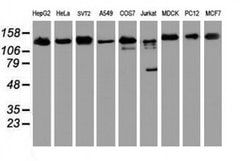
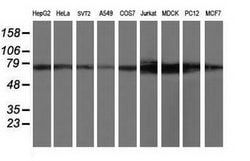
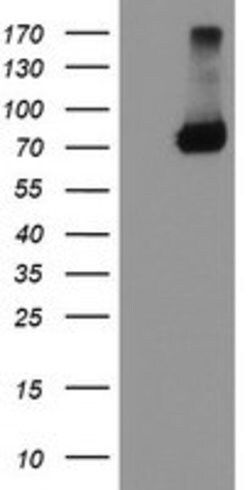
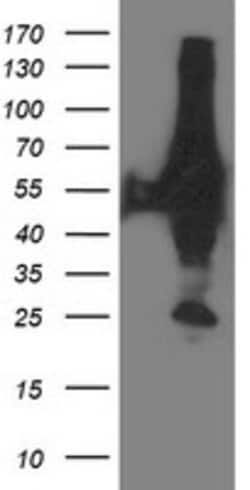
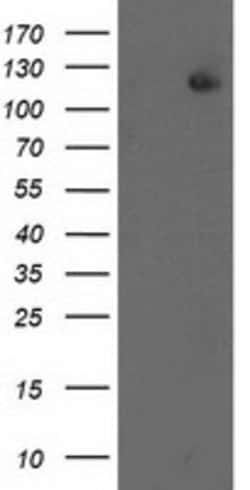
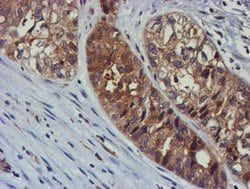
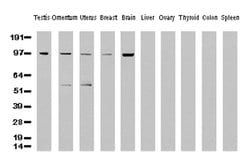
Flow Cytometry, Immunocytochemistry, Immunofluorescence, Immunohistochemistry (Paraffin), Western Blot
Clone
OTI2E1
Formulation
PBS with 8% trehalose and no preservative; pH 7.3
Gene Accession No.
P52479, Q14694, Q3KR59
Gene Symbols
Usp10
Immunogen
Full length human recombit protein of human USP10 produced in HEK293T cell.
Quantity
100 μg
Primary or Secondary
Primary
Target Species
Canine, Human, Mouse, Rat
Product Type
Antibody
Isotype
IgG1
Related Products
Description
- Reconstitute with PBS (pH 7.3) and recommend to perform another round of desalting process using Product No
- 7KMWCO Ubiquitin is a highly conserved protein that is covalently linked to other proteins to regulate their function and degradation
- This gene encodes a member of the ubiquitin-specific protease family of cysteine proteases
- The enzyme specifically cleaves ubiquitin from ubiquitin-conjugated protein substrates
- The protein is found in the nucleus and cytoplasm
- It functions as a co-factor of the DNA-bound androgen receptor complex, and is inhibited by a protein in the Ras-GTPase pathway
- The human genome contains several pseudogenes similar to this gene.