50-166-6035
GAPDH Mouse anti-Canine, Human, Mouse, Rat, Clone: OTI2D9, lyophilized, TrueMAB™
Manufacturer: OriGene
Select a Size
| Pack Size | SKU | Availability | Price |
|---|---|---|---|
| Each of 1 | 50-166-6035-Each-of-1 | In Stock | ₹ 60,342.00 |
50-166-6035 - Each of 1
In Stock
Quantity
1
Base Price: ₹ 60,342.00
GST (18%): ₹ 10,861.56
Total Price: ₹ 71,203.56
Antigen
GAPDH
Classification
Monoclonal
Conjugate
Unconjugated
Gene
GAPDH
Gene Alias
G3PD, GAPD, HEL-S-162eP
Host Species
Mouse
Purification Method
Affinity Chromatography
Regulatory Status
RUO
Gene ID (Entrez)
14433, 24383, 2597, 403755
Content And Storage
-20° C, Avoid Freeze/Thaw Cycles
Form
Lyophilized
Applications
Western Blot
Clone
OTI2D9
Formulation
PBS with 8% trehalose and no preservative; pH 7.3
Gene Accession No.
P04406, P04797, P16858, Q28259
Gene Symbols
GAPDH
Immunogen
Full length human recombit protein of human GAPDH produced in HEK293T cell.
Quantity
100 μg
Primary or Secondary
Primary
Target Species
Canine, Human, Mouse, Rat
Product Type
Antibody
Isotype
IgG1
Related Products


Description
- Reconstitute with PBS (pH 7.3) and recommend to perform another round of desalting process using Product No
- 7KMWCO GAPDH (Glyceraldehyde-3-phosphate dehydrogenase) is a catalytic enzyme commonly known to be involved in glycolysis
- GAPDH exists as a tetramer of identical 37-kDa subunits and catalyzes the reversible reduction of 1,3-bisphosphoglycerate to glyceraldehyde 3-phosphophate in the presence of NADPH
- Apart from playing a key role in glycolysis, GAPDH is ubiquitously expressed and displays other activities unrelated to its glycolytic function
- GAPDH is reported to be involved in the processes of DNA replication, DNA repair, nuclear RNA export, membrane fusion and microtubule bundling
- Studies provide evidence of GAPDH playing an essential part in gene expression observed in apoptosis and as part of the cellular phenotype of age-related neurodegenerative diseases
- Further, GAPDH is involved in other cellular processes ranging from membrane fusion, and neuronal apoptosis in cancer
- GAPDH is reported to bind to a variety of other proteins, including the amyloid precursor protein, mutations in which cause some forms of Alzheimer′s disease (AD), and the polyglutamine tracts of Huntingtin, the protein product aberrant forms of which are causative of Huntington′s disease
- Associations between GAPDH, actin and tubulin have also be reported
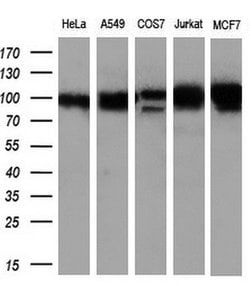
- Since GAPDH is expressed at high levels in most tissues, it is useful as protein loading control in Western Blot analysis.