50-167-4500
TP53I3 Mouse anti-Human, Clone: OTI3B11, liquid, TrueMAB™
Manufacturer: OriGene
Select a Size
| Pack Size | SKU | Availability | Price |
|---|---|---|---|
| Each of 1 | 50-167-4500-Each-of-1 | In Stock | ₹ 20,470.00 |
50-167-4500 - Each of 1
In Stock
Quantity
1
Base Price: ₹ 20,470.00
GST (18%): ₹ 3,684.60
Total Price: ₹ 24,154.60
Antigen
TP53I3
Classification
Monoclonal
Concentration
1 mg/mL
Formulation
PBS with 1% BSA, 50% glycerol and 0.02% sodium azide
Gene Accession No.
Q53FA7
Gene Symbols
TP53I3
Immunogen
Full length human recombit protein of human TP53I3 produced in HEK293T cell.
Quantity
30 μL
Primary or Secondary
Primary
Target Species
Human
Product Type
Antibody
Isotype
IgG1
Applications
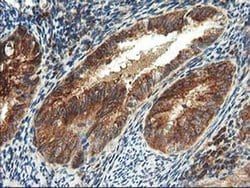
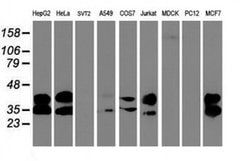
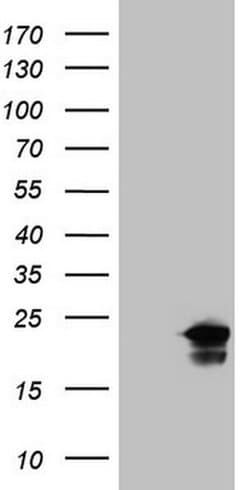
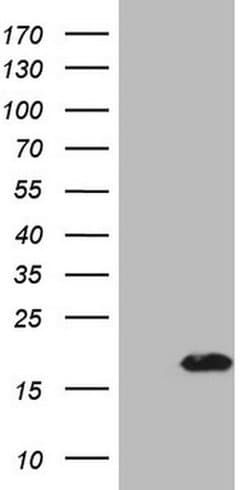
Immunohistochemistry (Paraffin), Western Blot
Clone
OTI3B11
Conjugate
Unconjugated
Gene
TP53I3
Gene Alias
PIG3
Host Species
Mouse
Purification Method
Affinity Chromatography
Regulatory Status
RUO
Gene ID (Entrez)
9540
Content And Storage
-20° C, Avoid Freeze/Thaw Cycles
Form
Liquid
Related Products



Description
- The protein encoded by this gene is similar to oxidoreductases, which are enzymes involved in cellular responses to oxidative stresses and irradiation
- This gene is induced by the tumor suppressor p53 and is thought to be involved in p53-mediated cell death
- It contains a p53 consensus binding site in its promoter region and a downstream pentanucleotide microsatellite sequence
- P53 has been shown to transcriptionally activate this gene by interacting with the downstream pentanucleotide microsatellite sequence
- The microsatellite is polymorphic, with a varying number of pentanucleotide repeats directly correlated with the extent of transcriptional activation by p53
- It has been suggested that the microsatellite polymorphism may be associated with differential susceptibility to cancer
- At least two transcript variants encoding the same protein have been found for this gene.