50-167-7003
VEGFB Monoclonal Antibody (OTI2C4), TrueMAB™, OriGene
Manufacturer: OriGene
Select a Size
| Pack Size | SKU | Availability | Price |
|---|---|---|---|
| Each of 1 | 50-167-7003-Each-of-1 | In Stock | ₹ 44,954.79 |
50-167-7003 - Each of 1
In Stock
Quantity
1
Base Price: ₹ 44,954.79
GST (18%): ₹ 8,091.862
Total Price: ₹ 53,046.652
Antigen
VEGFB
Classification
Monoclonal
Conjugate
Unconjugated
Gene
VEGFB
Gene Alias
VEGFL, VRF
Host Species
Mouse
Purification Method
Affinity Chromatography
Regulatory Status
RUO
Gene ID (Entrez)
7423
Content And Storage
-20° C, Avoid Freeze/Thaw Cycles
Form
Liquid
Applications
Immunohistochemistry (Paraffin), Western Blot
Clone
OTI2C4
Formulation
PBS with 1% BSA, 50% glycerol and 0.02% sodium azide
Gene Accession No.
P49765
Gene Symbols
VEGFB
Immunogen
Full length human recombit protein of human VEGFB produced in HEK293T cell.
Quantity
100 μL
Primary or Secondary
Primary
Target Species
Human
Product Type
Antibody
Isotype
IgG2b
Related Products


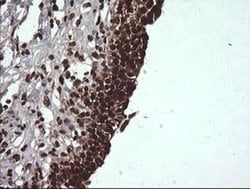

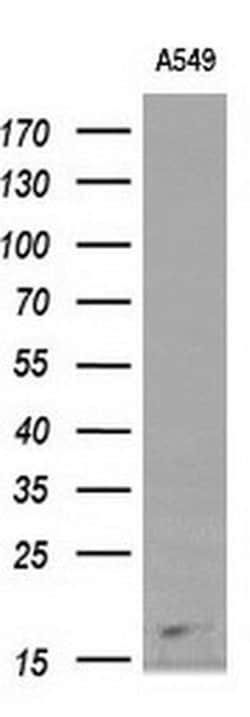
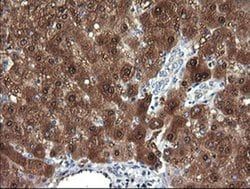
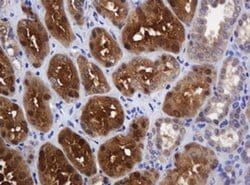
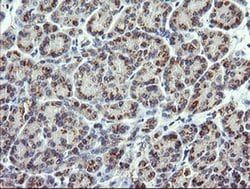
Description
- Vascular endothelial growth factors (VEGFs) are a family of closely related growth factors having a conserved pattern of eight cysteine residues and sharing common VEGF receptors
- VEGFs stimulate endothelial cells, induce angiogenesis, promote cell migration, increase vascular permeability, and inhibit apoptosis
- VEGFB has structural similarities to VEGF and PIGF and is frequently co-expressed with VEGF
- There are two alternatively spliced isoforms of VEGFB: VEGFB 167 and VEGFB 186
- VEGFB 167, a highly basic heparin-binding protein, remains with the cell or extracellular matrix whereas, VEGFB 186 is readily secreted
- VEGFB stimulates endothelial cell proliferation
- VEGFB binds to the tyrosine kinase receptor VEGFR1 (flt1) and does not bind to VEGFR2
- Vascular Endothelial Growth Factor B is widely expressed but is most abundant in heart, skeletal muscle, and pancreas
- It has been suggested that VEGFB expression in human primary breast cancers is associated with lymph node metastasis
- The genes that encode VEGFB have been mapped to chromosome 11q13.