50-172-6035
SNX6 Rabbit anti-Human, Mouse, Rat, Polyclonal, Proteintech
Manufacturer: Proteintech Group Inc
Select a Size
| Pack Size | SKU | Availability | Price |
|---|---|---|---|
| Each of 1 | 50-172-6035-Each-of-1 | In Stock | ₹ 44,150.23 |
50-172-6035 - Each of 1
In Stock
Quantity
1
Base Price: ₹ 44,150.23
GST (18%): ₹ 7,947.041
Total Price: ₹ 52,097.271
Antigen
SNX6
Classification
Polyclonal
Conjugate
Unconjugated
Gene
SNX6
Gene Alias
MSTP010, SNX6, sorting nexin 6, TFAF2, TRAF4 associated factor 2
Host Species
Rabbit
Purification Method
Antigen Affinity Chromatography
Regulatory Status
RUO
Gene ID (Entrez)
362738, 58533, 72183
Content And Storage
-20°C
Form
Liquid
Applications
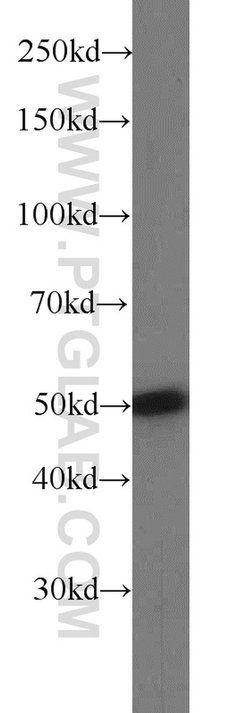
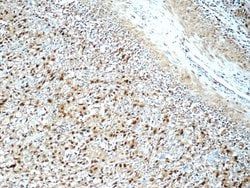
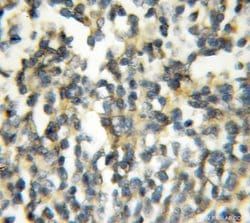
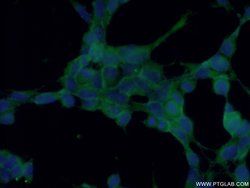
Flow Cytometry, Immunohistochemistry (Paraffin), Immunoprecipitation, Western Blot
Concentration
0.17 mg/mL
Formulation
PBS with 50% glycerol and 0.1% sodium azide; pH 7.3
Gene Accession No.
Q6P8X1, Q9UNH7
Gene Symbols
Snx6
Immunogen
SNX6 Fusion Protein Ag0168
Quantity
150 μL
Primary or Secondary
Primary
Target Species
Human, Mouse, Rat
Product Type
Antibody
Isotype
IgG
Related Products
Description
- SNX6 interacts with members of the transforming growth factor-beta family of receptor serine-threonine kinases
- These receptors belong to two classes: type II receptors that bind ligand, and type I receptors that are subsequently recruited to transduce the signal
- Of the type II receptors, SNX6 was found to interact strongly with ActRIIB and more moderately with wild type and kinase-defective mutants of TbetaRII
- Of the type I receptors, SNX6 was found to interact only with inactivated TbetaRI
- SNXs 1-4 also interacted with the transforming growth factor-beta receptor family, showing different receptor preferences
- Conversely, SNX6 behaved similarly to the other SNX proteins in its interactions with receptor tyrosine kinases
- Strong heteromeric interactions were also seen among SNX1, -2, -4, and -6, suggesting the formation in vivo of oligomeric complexes
- These findings are the first evidence for the association of the SNX family of molecules with receptor serine-threonine kinases.