50-172-6067
CDC42 Rabbit anti-Human, Mouse, Rat, Polyclonal, Proteintech
Manufacturer: Proteintech Group Inc
Select a Size
| Pack Size | SKU | Availability | Price |
|---|---|---|---|
| Each of 1 | 50-172-6067-Each-of-1 | In Stock | ₹ 44,150.23 |
50-172-6067 - Each of 1
In Stock
Quantity
1
Base Price: ₹ 44,150.23
GST (18%): ₹ 7,947.041
Total Price: ₹ 52,097.271
Antigen
CDC42
Classification
Polyclonal
Conjugate
Unconjugated
Gene
CDC42
Gene Alias
CDC42, CDC42Hs, G25K, G25K GTP binding protein
Host Species
Rabbit
Purification Method
Antigen Affinity Chromatography
Regulatory Status
RUO
Gene ID (Entrez)
12540, 64465, 998
Content And Storage
-20°C
Form
Liquid
Applications
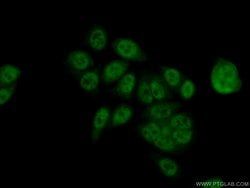
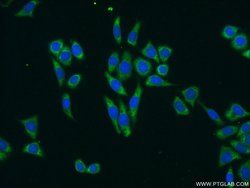
Immunocytochemistry, Immunofluorescence, Immunohistochemistry (Paraffin), Western Blot
Concentration
0.35 mg/mL
Formulation
PBS with 50% glycerol and 0.1% sodium azide; pH 7.3
Gene Accession No.
P60766, P60953, Q8CFN2
Gene Symbols
Cdc42
Immunogen
CDC42 Fusion Protein Ag0207
Quantity
150 μL
Primary or Secondary
Primary
Target Species
Human, Mouse, Rat
Product Type
Antibody
Isotype
IgG
Related Products


Description
- This protein is a small GTPase of the Rho subfamily, which regulates signaling pathways that control diverse cellular functions including cell morphology, migration, endocytosis, and cell progression
- This protein is highly similar to Saccharomyces cerevisiae Cdc 42, and is able to complement the yeast cdc42 1 mutant
- The product of oncogene Dbl was reported to specifically catalyze the dissociation of GDP from this protein
- This protein could regulate actin polymerization through its direct binding to Neural Wiskott-Aldrick syndrome protein (N-WASP), which subsequently activates Arp2/3 complex
- Alternative splicing of this gene results in at least two transcript variants.