50-172-6144
USP11 Rabbit anti-Human, Polyclonal, Proteintech
Manufacturer: Proteintech Group Inc
Select a Size
| Pack Size | SKU | Availability | Price |
|---|---|---|---|
| Each of 1 | 50-172-6144-Each-of-1 | In Stock | ₹ 44,150.23 |
50-172-6144 - Each of 1
In Stock
Quantity
1
Base Price: ₹ 44,150.23
GST (18%): ₹ 7,947.041
Total Price: ₹ 52,097.271
Antigen
USP11
Classification
Polyclonal
Conjugate
Unconjugated
Gene
USP11
Gene Alias
Deubiquitinating enzyme 11, Ubiquitin thiolesterase 11, UHX1, USP11
Host Species
Rabbit
Purification Method
Antigen Affinity Chromatography
Regulatory Status
RUO
Gene ID (Entrez)
8237
Content And Storage
-20°C
Form
Liquid
Applications
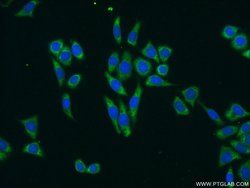
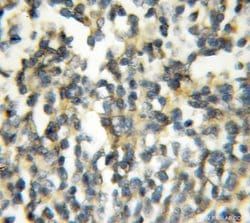
Immunohistochemistry (Paraffin), Immunoprecipitation, Western Blot
Concentration
0.13 mg/mL
Formulation
PBS with 50% glycerol and 0.1% sodium azide; pH 7.3
Gene Accession No.
P51784
Gene Symbols
USP11
Immunogen
USP11 Fusion Protein Ag0296
Quantity
150 μL
Primary or Secondary
Primary
Target Species
Human
Product Type
Antibody
Isotype
IgG
Related Products


Description
- Modification of target proteins by ubiquitin participates in a wide array of biological functions
- Proteins destined for degradation or processing via the 26 S proteasome are coupled to multiple copies of ubiquitin
- However, attachment of ubiquitin or ubiquitin-related molecules may also result in changes in subcellular distribution or modification of protein activity
- An additional level of ubiquitin regulation, deubiquitination, is catalyzed by proteases called deubiquitinating enzymes, which fall into four distinct families
- Ubiquitin C-terminal hydrolases, ubiquitin-specific processing proteases (USPs),1 OTU-domain ubiquitin-aldehyde-binding proteins, and Jab1/Pad1/MPN-domain-containing metallo-enzymes
- Among these four families, USPs represent the most widespread and represented deubiquitinating enzymes across evolution
- USPs tend to release ubiquitin from a conjugated protein
- They display similar catalytic domains containing conserved Cys and His boxes but divergent N-terminal and occasionally C-terminal extensions, which are thought to function in substrate recognition, subcellular localization, and protein-protein interactions.