50-172-6233
STOML2 Rabbit anti-Human, Mouse, Rat, Polyclonal, Proteintech
Manufacturer: Proteintech Group Inc
Select a Size
| Pack Size | SKU | Availability | Price |
|---|---|---|---|
| Each of 1 | 50-172-6233-Each-of-1 | In Stock | ₹ 44,150.23 |
50-172-6233 - Each of 1
In Stock
Quantity
1
Base Price: ₹ 44,150.23
GST (18%): ₹ 7,947.041
Total Price: ₹ 52,097.271
Antigen
STOML2
Classification
Polyclonal
Conjugate
Unconjugated
Gene
STOML2
Gene Alias
EPB72 like protein 2, HSPC108, SLP 2, SLP2, stomatin (EPB72) like 2, Stomatin like protein 2, STOML2
Host Species
Rabbit
Purification Method
Antigen Affinity Chromatography
Regulatory Status
RUO
Gene ID (Entrez)
298203, 30968, 66592
Content And Storage
-20°C
Form
Liquid
Applications
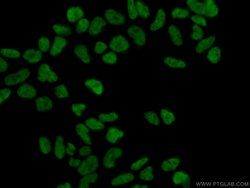
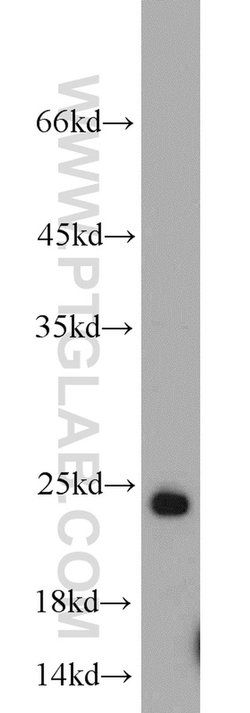
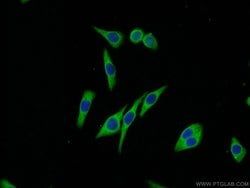
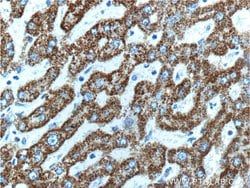
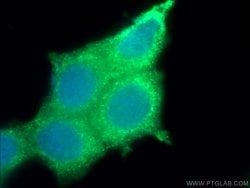
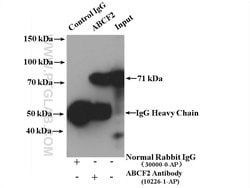
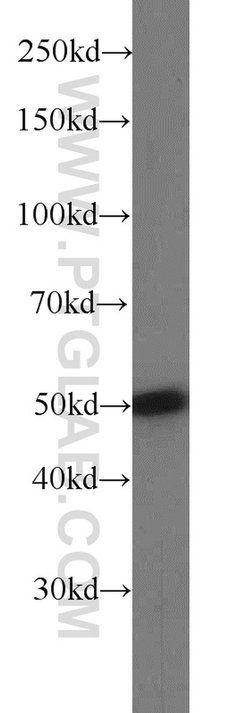
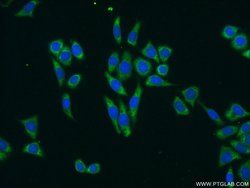
Immunocytochemistry, Immunofluorescence, Immunohistochemistry (Paraffin), Immunoprecipitation, Western Blot
Concentration
0.21 mg/mL
Formulation
PBS with 50% glycerol and 0.1% sodium azide; pH 7.3
Gene Accession No.
Q4FZT0, Q99JB2, Q9UJZ1
Gene Symbols
Stoml2
Immunogen
STOML2 Fusion Protein Ag0363
Quantity
150 μL
Primary or Secondary
Primary
Target Species
Human, Mouse, Rat
Product Type
Antibody
Isotype
IgG
Related Products
Description
- Mitochondrial protein that probably regulates the biogenesis and the activity of mitochondria
- Stimulates cardiolipin biosynthesis, binds cardiolipin-enriched membranes where it recruits and stabilizes some proteins including prohibitin and may therefore act in the organization of functional microdomains in mitochondrial membranes
- Through regulation of the mitochondrial function may play a role into several biological processes including cell migration, cell proliferation, T-cell activation, calcium homeostasis and cellular response to stress
- May play a role in calcium homeostasis through negative regulation of calcium efflux from mitochondria
- Required for mitochondrial hyperfusion a pro-survival cellular response to stress which results in increased ATP production by mitochondria
- May also regulate the organization of functional domains at the plasma membrane and play a role in T-cell activation through association with the T-cell receptor signaling complex and its regulation.