50-172-9927
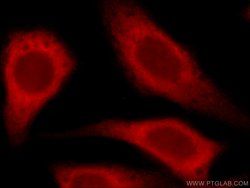
GPM6A Rabbit anti-Human, Mouse, Rat, Polyclonal, Proteintech
Manufacturer: Proteintech Group Inc
Select a Size
| Pack Size | SKU | Availability | Price |
|---|---|---|---|
| Each of 1 | 50-172-9927-Each-of-1 | In Stock | ₹ 44,150.23 |
50-172-9927 - Each of 1
In Stock
Quantity
1
Base Price: ₹ 44,150.23
GST (18%): ₹ 7,947.041
Total Price: ₹ 52,097.271
Antigen
GPM6A
Classification
Polyclonal
Conjugate
Unconjugated
Gene
GPM6A
Gene Alias
glycoprotein M6A, GPM6, GPM6A, M6A
Host Species
Rabbit
Purification Method
Antigen Affinity Chromatography
Regulatory Status
RUO
Gene ID (Entrez)
234267, 2823, 306439
Content And Storage
-20°C
Form
Liquid
Applications
Immunohistochemistry (Paraffin), Immunoprecipitation, Western Blot
Concentration
0.17 mg/mL
Formulation
PBS with 50% glycerol and 0.02% sodium azide; pH 7.3
Gene Accession No.
P35802, P51674, Q812E9
Gene Symbols
Gpm6a
Immunogen
GPM6A Fusion Protein Ag6915
Quantity
150 μL
Primary or Secondary
Primary
Target Species
Human, Mouse, Rat
Product Type
Antibody
Isotype
IgG
Related Products



Description
- Neuronal membrane glycoprotein M6-a is a protein that in humans is encoded by the GPM6A gene
- Involved in neuronal differentiation, including differentiation and migration of neuronal stem cells
- Plays a role in neuronal plasticity and is involved in neurite and filopodia outgrowth, filopodia motility and probably synapse formation
- GPM6A-induced filopodia formation involves mitogen-activated protein kinase (MAPK) and Src signaling pathways
- May be involved in neuronal NGF-dependent Ca2+ influx
- May be involved in regulation of endocytosis and intracellular trafficking of G-protein-coupled receptors (GPCRs); enhances internalization and recycling of mu-type opioid receptor.