50-173-1204
GFAP Rabbit anti-Human, Mouse, Rat, Polyclonal, Proteintech
Manufacturer: Proteintech Group Inc
Select a Size
| Pack Size | SKU | Availability | Price |
|---|---|---|---|
| Each of 1 | 50-173-1204-Each-of-1 | In Stock | ₹ 44,150.23 |
50-173-1204 - Each of 1
In Stock
Quantity
1
Base Price: ₹ 44,150.23
GST (18%): ₹ 7,947.041
Total Price: ₹ 52,097.271
Antigen
GFAP
Classification
Polyclonal
Conjugate
Unconjugated
Gene
GFAP
Gene Alias
GFAP
Host Species
Rabbit
Purification Method
Antigen Affinity Chromatography
Regulatory Status
RUO
Gene ID (Entrez)
14580, 24387, 2670
Content And Storage
-20°C
Form
Liquid
Applications
Immunocytochemistry, Immunofluorescence, Immunohistochemistry (Paraffin), Western Blot
Concentration
0.43 mg/mL
Formulation
PBS with 50% glycerol and 0.02% sodium azide; pH 7.3
Gene Accession No.
P03995, P14136, P47819
Gene Symbols
Gfap
Immunogen
GFAP Fusion Protein Ag10423
Quantity
150 μL
Primary or Secondary
Primary
Target Species
Human, Mouse, Rat
Product Type
Antibody
Isotype
IgG
Related Products
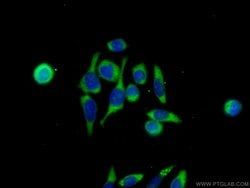

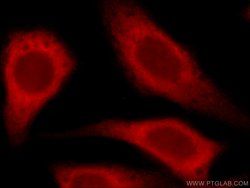
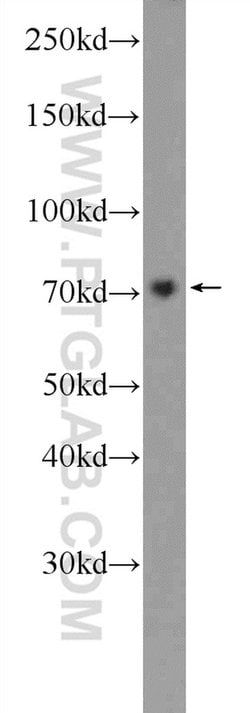
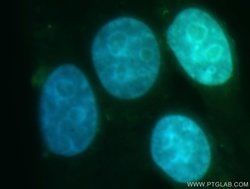
Description
- GFAP (Glial fibrillary acidic protein) is a member of the class III intermediate filament protein family
- GFAP is heavily, and specifically, expressed in astrocytes and certain astroglia in the central nervous system, in satellite cells in peripheral ganglia, and in non-myelinating Schwann cells in peripheral nerves
- In addition, neural stem cells strongly express GFAP
- Antibodies to GFAP are very useful as markers of astrocytic cells
- In addition, many types of brain tumor, presumably derived from astrocytic cells, heavily express GFAP
- GFAP is also found in the lens epithelium, Kupffer cells of the liver, in some cells in salivary tumors and has been reported in erythrocytes
- GFAP is used as a marker to distinguish astrocytes from other glial cells during development
- Mutations in this gene cause Alexander disease, a rare disorder of astrocytes in the central nervous system
- Alternative splicing of the GFAP gene results in multiple transcript variants encoding distinct isoforms.