50-173-0017
VPS72 Rabbit anti-Human, Mouse, Rat, Polyclonal, Proteintech
Manufacturer: Proteintech Group Inc
Select a Size
| Pack Size | SKU | Availability | Price |
|---|---|---|---|
| Each of 1 | 50-173-0017-Each-of-1 | In Stock | ₹ 44,150.23 |
50-173-0017 - Each of 1
In Stock
Quantity
1
Base Price: ₹ 44,150.23
GST (18%): ₹ 7,947.041
Total Price: ₹ 52,097.271
Antigen
VPS72
Classification
Polyclonal
Conjugate
Unconjugated
Gene
VPS72
Gene Alias
CFL1, Protein YL 1, Swc2, TCFL1, Transcription factor like 1, VPS72, YL 1, YL1
Host Species
Rabbit
Purification Method
Antigen Affinity Chromatography
Regulatory Status
RUO
Gene ID (Entrez)
21427, 310661, 6944
Content And Storage
-20°C
Form
Liquid
Applications
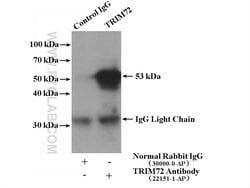
Immunoprecipitation, Western Blot
Concentration
0.25 mg/mL
Formulation
PBS with 50% glycerol and 0.02% sodium azide; pH 7.3
Gene Accession No.
Q15906, Q62481
Gene Symbols
VPS72
Immunogen
VPS72 Fusion Protein Ag7424
Quantity
150 μL
Primary or Secondary
Primary
Target Species
Human, Mouse, Rat
Product Type
Antibody
Isotype
IgG
Related Products


Description
- Vacuolar protein sorting-associated protein 72 homolog (VPS72), also known as VPS72 or Transcription factor-like 1, is a 364 amino acid subunit of the TRRAP/TIP60 HAT complex
- VPS72 has also been identified as a subunit of a novel complex containing SNF2-related helicase SRCAP (SWI2/SNF2-related CBP activator protein)
- This SRCAP-containing complex is very similar to the S
- cerevisiae SWR1 chromatin remodeling complex
- The involvement of VPS72 in these complexes has suggested that VPS72 plays multiple roles in chromatin modification and remodeling in cells
- VPS72 localizes to the nucleus and is phosphorylated upon DNA damage, most likely by ATM or ATR.