50-173-0114
POLE3 Rabbit anti-Human, Mouse, Rat, Polyclonal, Proteintech
Manufacturer: Proteintech Group Inc
Select a Size
| Pack Size | SKU | Availability | Price |
|---|---|---|---|
| Each of 1 | 50-173-0114-Each-of-1 | In Stock | ₹ 44,150.23 |
50-173-0114 - Each of 1
In Stock
Quantity
1
Base Price: ₹ 44,150.23
GST (18%): ₹ 7,947.041
Total Price: ₹ 52,097.271
Antigen
POLE3
Classification
Polyclonal
Conjugate
Unconjugated
Gene
POLE3
Gene Alias
Arsenic transactivated protein, AsTP, CHARAC17, CHRAC 17, CHRAC17, DNA polymerase II subunit 3, HuCHRAC17, p17, POLE3, YBL1
Host Species
Rabbit
Purification Method
Antigen Affinity Chromatography
Regulatory Status
RUO
Gene ID (Entrez)
298098, 54107, 59001
Content And Storage
-20°C
Form
Liquid
Applications
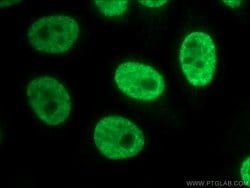
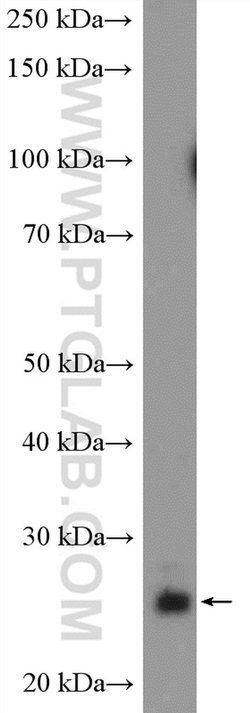
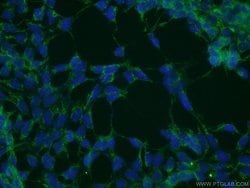
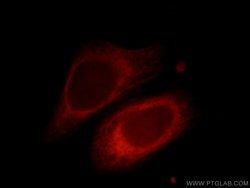
Immunocytochemistry, Immunofluorescence, Immunohistochemistry (Paraffin), Immunoprecipitation, Western Blot
Concentration
0.19 mg/mL
Formulation
PBS with 50% glycerol and 0.02% sodium azide; pH 7.3
Gene Accession No.
Q642A5, Q9JKP7, Q9NRF9
Gene Symbols
Pole3
Immunogen
POLE3 Fusion Protein Ag7396
Quantity
150 μL
Primary or Secondary
Primary
Target Species
Human, Mouse, Rat
Product Type
Antibody
Isotype
IgG
Related Products
Description
- DNA replication is initiated by the binding of initiation factors to the origin of replication
- Nucleosomes inhibit access to the replication machinery at these origin sequences
- Nucleosome remodeling factors increase the accessibility of nucleosomal DNA to transcriptional regulators
- CHRAC15 and CHRAC17 are subunits of the nucleosomal remodeling factor CHRAC (chromatin accessibility complex),which increases the accessibility of nucleosomal DNA in an ATP-dependent manner
- Unlike other known chromatin remodelling factors, CHRAC also functions during chromatin assembly by using ATP to convert irregular chromatin into a regular array of nucleosomes with even spacing
- This conversion process occurs when CHRAC organizes randomly deposited histones into a regularly spaced array
- In the presence of CHRAC, the nucleosomal ATPase ISWI catalyses several ATP-dependent transitions of chromatin structure.