50-173-1032
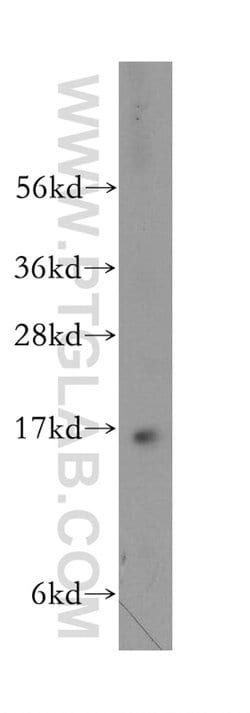
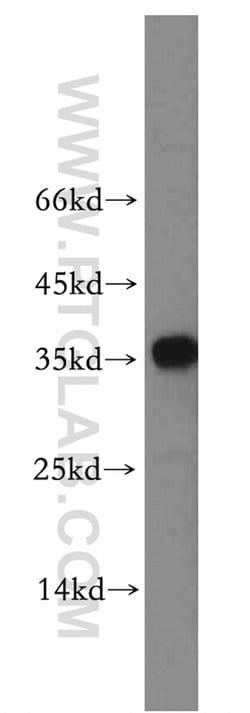
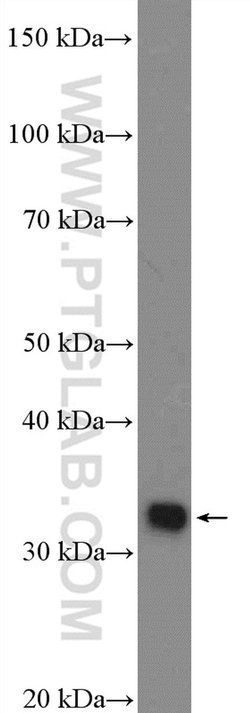
POLR3B Rabbit anti-Human, Mouse, Rat, Polyclonal, Proteintech
Manufacturer: Proteintech Group Inc
Select a Size
| Pack Size | SKU | Availability | Price |
|---|---|---|---|
| Each of 1 | 50-173-1032-Each-of-1 | In Stock | ₹ 44,150.23 |
50-173-1032 - Each of 1
In Stock
Quantity
1
Base Price: ₹ 44,150.23
GST (18%): ₹ 7,947.041
Total Price: ₹ 52,097.271
Antigen
POLR3B
Classification
Polyclonal
Conjugate
Unconjugated
Gene
POLR3B
Gene Alias
C128, POLR3B, RNA polymerase III subunit C2, RPC2
Host Species
Rabbit
Purification Method
Antigen Affinity Chromatography
Regulatory Status
RUO
Gene ID (Entrez)
362858, 55703, 70428
Content And Storage
-20°C
Form
Liquid
Applications
Western Blot
Concentration
0.13 mg/mL
Formulation
PBS with 50% glycerol and 0.02% sodium azide; pH 7.3
Gene Accession No.
P59470, Q9NW08
Gene Symbols
Polr3b
Immunogen
POLR3B Fusion Protein Ag9856
Quantity
150 μL
Primary or Secondary
Primary
Target Species
Human, Mouse, Rat
Product Type
Antibody
Isotype
IgG
Related Products

Description
- Members of the Protein kinase C (PKC) family of serine/threonine protein kinases are grouped by their activation mechanism
- Classical or conventional PKCs (PKC alpha-, betaI- , betaII- and gamma-) are activated by phosphatidylserine in a calcium dependent manner and can bind diacylglycerol
- The Ca2+ insensitive novel PKCs (PKCs epsilon-, delta-, theta- and eta) are also activated by diacylglycerol and phosphatidylserine
- The atypical PKCs (PKCs iota- and zeta-) are insensitive to Ca2+, DAG and phorbolesters
- All PKCs isoforms consist of a highly conserved catalytic domain connected to a regulatory domain via a hinge region
- PKCs are involved in positive and negative regulation of cell proliferation, apoptosis, differentiation, migration and adhesion, tumorigenesis, cardiac hypertrophy, angiogenesis, platelet function and inflammation, by directly phosphorylating targets such as RAF1, BCL2, CSPG4, TNNT2/CTNT, or activating signaling cascades involving MAPK1/3 (ERK1/2) and RAP1GAP.