50-173-7228
PR Mouse anti-Human, Biotin, Clone: 3D1D12, Proteintech
Manufacturer: Proteintech Group Inc
Select a Size
| Pack Size | SKU | Availability | Price |
|---|---|---|---|
| Each of 1 | 50-173-7228-Each-of-1 | In Stock | ₹ 44,150.23 |
50-173-7228 - Each of 1
In Stock
Quantity
1
Base Price: ₹ 44,150.23
GST (18%): ₹ 7,947.041
Total Price: ₹ 52,097.271
Antigen
PR
Classification
Monoclonal
Concentration
0.67 mg/mL
Formulation
PBS with 50% glycerol and 0.02% sodium azide; pH 7.3
Gene Accession No.
P06401
Gene Symbols
PGR
Immunogen
PR Fusion Protein Ag22992
Quantity
100 μL
Primary or Secondary
Primary
Target Species
Human
Product Type
Antibody
Isotype
IgG1
Applications
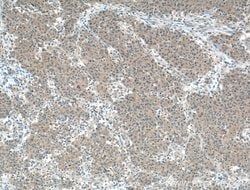
Immunohistochemistry (Paraffin)
Clone
3D1D12
Conjugate
Biotin
Gene
PGR
Gene Alias
NR3C3, PGR, PR, progesterone receptor
Host Species
Mouse
Purification Method
Protein G
Regulatory Status
RUO
Gene ID (Entrez)
5241
Content And Storage
-20°C
Form
Liquid
Related Products




Description
- The progesterone receptor is a member of the Steroid Hormone Receptor Superfamily
- It exists in two distinct isoforms in human cells
- PR-B is the transcriptionally active form and is responsible for activating genes for the maintainence of the endometrium, maintece of pregcy, and inhibition of ovulation
- PR-A is identical to PR-B except for a 165 amino acid deletion at the N-terminus
- This deletion exposes a 140 amino acid inhibitory domain (ID) that acts as a repressor of steroid hormone transcriptional activity
- Phospholabeling studies have shown that PR is phosphorylated in at least 9 different locations in response to progestins, which suggests that PR affects many different cellular pathways.