50-264-1687
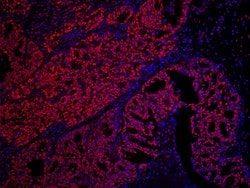
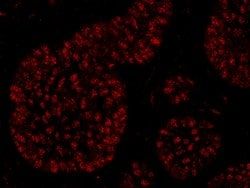
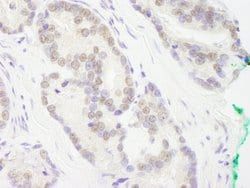
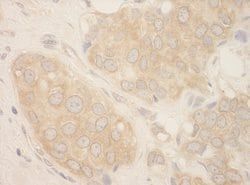
PARP10 Rabbit anti-Human, Polyclonal, Bethyl Laboratories
Manufacturer: Fischer Scientific
Select a Size
| Pack Size | SKU | Availability | Price |
|---|---|---|---|
| Each of 1 | 50-264-1687-Each-of-1 | In Stock | ₹ 16,470.34 |
50-264-1687 - Each of 1
In Stock
Quantity
1
Base Price: ₹ 16,470.34
GST (18%): ₹ 2,964.661
Total Price: ₹ 19,435.001
Antigen
PARP10
Classification
Polyclonal
Conjugate
Unconjugated
Gene
PARP10
Gene Alias
Poly (ADP-ribose) polymerase family member 10, FLJ14464
Host Species
Rabbit
Purification Method
Antigen affinity chromatography
Regulatory Status
RUO
Gene ID (Entrez)
84875
Content And Storage
4° C
Form
Liquid
Applications
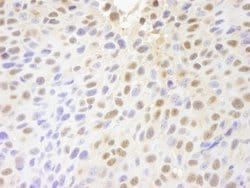
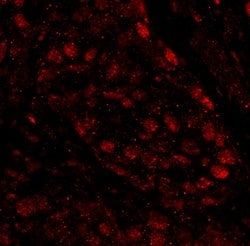
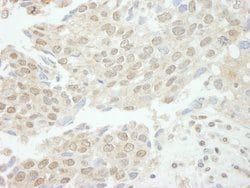
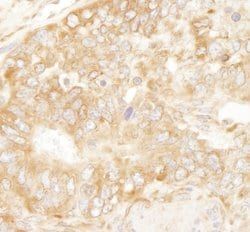
Immunoprecipitation, Immunohistochemistry, Western Blot
Concentration
1 mg/ml
Formulation
phosphate, tris citrate with 0.09% sodium azide; pH 7-8
Gene Accession No.
Q53GL7
Gene Symbols
PARP10
Immunogen
Between 300 and 350
Quantity
10μL
Primary or Secondary
Primary
Target Species
Human
Product Type
Antibody
Isotype
IgG
Related Products
Description
- The recommended shelf life for this product is 1 year from date of receipt
- Application Note: For IHC, epitope retrieval with citrate buffer pH 6.0 is recommended for FFPE tissue sections
- Poly(ADP-ribose) polymerases (PARPs), such as PARP10, regulate gene transcription by altering chromatin organization by adding ADP-ribose to histones
- PARPs can also function as transcriptional cofactors.Poly(ADP-ribose) polymerases (PARPs), such as PARP10, regulate gene transcription by altering chromatin organization by adding ADP-ribose to histones
- PARPs can also function as transcriptional cofactors (Yu et al., 2005 [;PubMed 15674325]).[supplied by OMIM].