RANKL (soluble) Polyclonal Antibody, Biotin, PeproTech®, Invitrogen™
Manufacturer: Fischer Scientific
Select a Size
| Pack Size | SKU | Availability | Price |
|---|---|---|---|
| Each of 1 | 50-271-8465-Each-of-1 | In Stock | ₹ 1,75,552.50 |
50-271-8465 - Each of 1
In Stock
Quantity
1
Base Price: ₹ 1,75,552.50
GST (18%): ₹ 31,599.45
Total Price: ₹ 2,07,151.95
Antigen
RANKL (soluble)
Classification
Polyclonal
Conjugate
Biotin
Gene
TNFSF11
Gene Alias
CD254; H-RANK-L; hRANKL2; Ly109l; M-Rank-L; ODF; OPG; OPG ligand; OPGL; OPTB2; Osteoclast differentiation factor; osteoprotegerin ligand; Rankl; rank-l; receptor activator of NF-kappaB ligand; receptor activator of nuclear factor kappa B ligand; receptor activator of nuclear factor kappa-B ligand; RP11-86N24.2; sOdf; srankl; TNF-related activation-induced cytokine; Tnfsf11; TNLG6B; Trance; tumor necrosis factor (ligand) superfamily member 11; tumor necrosis factor (ligand) superfamily, member 11; tumor necrosis factor ligand 6B; tumor necrosis factor ligand superfamily member 11; Tumor necrosis factor ligand superfamily member 11, membrane form; Tumor necrosis factor ligand superfamily member 11, soluble form; tumor necrosis factor superfamily member 11; tumor necrosis factor-related activation-induced cytokine
Host Species
Rabbit
Purification Method
Antigen affinity chromatography
Regulatory Status
RUO
Gene ID (Entrez)
21943
Content And Storage
-20°C
Isotype
IgG
Applications
Western Blot, ELISA
Concentration
0.1-1.0 mg/mL
Formulation
PBS with no preservative
Gene Accession No.
O35235
Gene Symbols
TNFSF11
Immunogen
E.coli-derived, 19.4 kDa Recombinant Murine sRANK Ligand
Quantity
500μg
Primary or Secondary
Primary
Target Species
Mouse
Form
Lyophilized
Related Products


Description
- AA Sequence of recombinant protein: PAMMEGSWLD VAQRGKPEAQ PFAHLTINAA SIPSGSHKVT LSSWYHDRGW AKISNMTLSN GKLRVNQDGF YYLYANICFR HHETSGSVPT DYLQLMVYVV KTSIKIPSSH NLMKGGSTKN WSGNSEFHFY SINVGGFFKL RAGEEISIQV SNPSLLDPDQ DATYFGAFKV QDID
- Preparation: Produced from sera of rabbits immunized with highly pure Recombinant Murine sRANK Ligand
- Anti-Murine sRANK Ligand-specific antibody was purified by affinity chromatography and then biotinylated
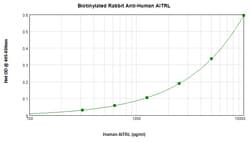
- Sandwich ELISA: To detect msRANKL by sandwich ELISA (using 100 μL/well antibody solution) a concentration of 0.25-1.0 μg/mL of this antibody is required
- This biotinylated polyclonal antibody, in conjunction with PeproTech Polyclonal Anti-Murine sRANKL (500-P63) as a capture antibody, allows the detection of at least 0.2-0.4 ng/well of Recombinant msRANKL
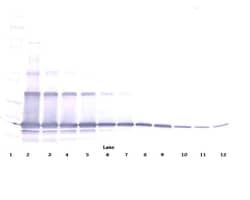
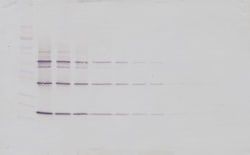
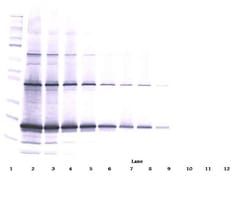
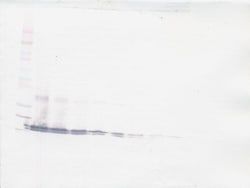
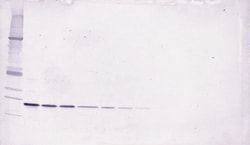
- Western Blot: To detect msRANKL by Western Blot analysis this antibody can be used at a concentration of 0.1-0.2 mg/mL
- Used in conjunction with compatible secondary reagents the detection limit for Recombinant msRANKL is 1.5-3.0 ng/lane, under either reducing or non-reducing conditions
- 500-P63BT-1MG will be provided as 2 x 500 μg This gene encodes a member of the tumor necrosis factor (TNF) cytokine family which is a ligand for osteoprotegerin and functions as a key factor for osteoclast differentiation and activation
- This protein was shown to be a dentritic cell survival factor and is involved in the regulation of T cell-dependent immune response
- T cell activation was reported to induce expression of this gene and lead to an increase of osteoclastogenesis and bone loss
- This protein was shown to activate antiapoptotic kinase AKT/PKB through a signaling complex involving SRC kinase and tumor necrosis factor receptor-associated factor (TRAF) 6, which indicated this protein may have a role in the regulation of cell apoptosis
- Targeted disruption of the related gene in mice led to severe osteopetrosis and a lack of osteoclasts
- The deficient mice exhibited defects in early differentiation of T and B lymphocytes, and failed to form lobulo-alveolar mammary structures during pregnancy
- Two alternatively spliced transcript variants have been found.