TNFR1 (soluble) Polyclonal Antibody, Biotin, PeproTech®, Invitrogen™
Manufacturer: Fischer Scientific
Select a Size
| Pack Size | SKU | Availability | Price |
|---|---|---|---|
| Each of 1 | 50-271-8669-Each-of-1 | In Stock | ₹ 1,75,552.50 |
50-271-8669 - Each of 1
In Stock
Quantity
1
Base Price: ₹ 1,75,552.50
GST (18%): ₹ 31,599.45
Total Price: ₹ 2,07,151.95
Antigen
TNFR1 (soluble)
Classification
Polyclonal
Conjugate
Biotin
Gene
Tnfrsf1a
Gene Alias
CD120a; CD120a antigen; FPF; hypothetical protein; metalloproteinase inhibitor 4; MGC19588; MS5; n-smase activation assoc. factor; p55; p55 TNF receptor; p55-R; p60; p62; p63; sCD120a; soluble CD120a; soluble TNFR1; sTNF RI; sTNFR I; sTNFR1; sTNFRI; TBP1; TBPI; TIMP metallopeptidase inhibitor 4; Timp4; TIMP-4; tissue inhibitor of metalloproteinase 4; tissue inhibitor of metalloproteinases 4; TNF receptor alpha chain; TNF receptor superfamily member 1A; TNF-alphaR1; TNF-alpha-R1; TNFalpha-R1; TNFAR; TNFR; TNF-R; TNFR I; TNFR1; TNF-R1; Tnfr-1; TNFR1-d2; Tnfr-2; TNFR55; TNF-R55; TNFR60; TNFRI; TNF-RI; TNF-R-I; TNFR-I; TNFRp55; Tnfrsf1a; tumor necrosis factor binding protein 1; Tumor necrosis factor receptor; tumor necrosis factor receptor 1; tumor necrosis factor receptor 1A isoform beta; tumor necrosis factor receptor superfamily member 1A; Tumor necrosis factor receptor superfamily member 1A, membrane form; tumor necrosis factor receptor superfamily, member 1A; tumor necrosis factor rec
Host Species
Rabbit
Purification Method
Antigen affinity chromatography
Regulatory Status
RUO
Gene ID (Entrez)
7132
Content And Storage
-20°C
Isotype
IgG
Applications
Western Blot, ELISA
Concentration
0.1-1.0 mg/mL
Formulation
PBS with no preservative
Gene Accession No.
P19438
Gene Symbols
Tnfrsf1a
Immunogen
E.coli-derived, 18.3 kDa Recombinant Human TNF Receptor Type I
Quantity
500μg
Primary or Secondary
Primary
Target Species
Human
Form
Lyophilized
Related Products


Description
- AA Sequence of recombinant protein: MDSVCPQGKY IHPQNNSICC TKCHKGTYLY NDCPGPGQDT DCRECESGSF TASENHLRHC LSCSKCRKEM GQVEISSCTV DRDTVCGCRK NQYRHYWSEN LFQCFNCSLC LNGTVHLSCQ EKQNTVCTCH AGFFLRENEC VSCSNCKKSL ECTKLCLPQI EN
- Preparation: Produced from sera of rabbits immunized with highly pure Recombinant Human sTNF Receptor Type I
- Anti-Human sTNF Receptor Type I-specific antibody was purified by affinity chromatography and then biotinylated
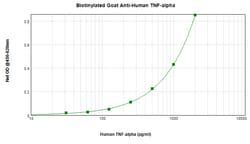
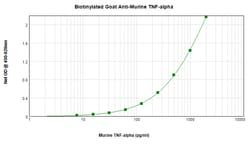
- Sandwich ELISA: To detect Human sTNF Receptor Type I by sandwich ELISA (using 100 μL/well antibody solution) a concentration of 0.25-1.0 μg/mL of this antibody is required
- This biotinylated polyclonal antibody, in conjunction with PeproTech Polyclonal Anti-Human sTNF Receptor Type I (500-P143) as a capture antibody, allows the detection of at least 0.2-0.4 ng/well of Recombinant Human sTNF Receptor Type I
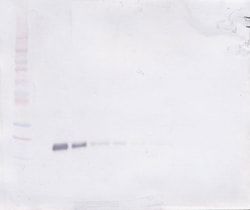
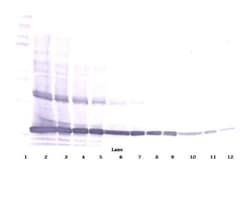
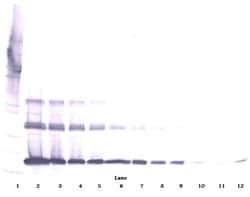
- Western Blot: To detect hsTNF-Receptor I by Western Blot analysis this antibody can be used at a concentration of 0.1-0.2 μg/mL
- Used in conjunction with compatible secondary reagents the detection limit for Recombinant hsTNF-Receptor I is 1.5-3.0 ng/lane, under either reducing or non-reducing conditions
- 500-P143BT-1MG will be provided as 2 x 500 μg TNFR1 (Tumor necrosis factor receptor 1) belongs to the tumor necrosis factor superfamily, and is one of the major TNF-alpha receptors
- TNFR1 plays an important role in mediating, in cytokine mediated signaling, positive regulation of the NF-Kb pathway, positive regulation of angiogenesis, and negative regulation of gene expression
- The extracellular domain of TNFR1 is also released into the circulatory system as soluble TNFR1 (sTNFR1)
- In humans, the TNFR1 gene is located on chromosome 12
- Anti-apoptotic protein BCL2-associated athanogene 4 (BAG4/SODD) and adaptor proteins TRADD and TRAF2 have been shown to interact with TNFR1, and thus play regulatory roles in the signal transduction mediated by the receptor
- Germline mutations of the extracellular domains of TNFR1 were found to be associated with the autosomal dominant periodic fever syndrome, and the impaired receptor clearance is thought to be a mechanism of the disease.