DDK (FLAG) Rabbit anti-Tag, Polyclonal, liquid, OriGene
Manufacturer: OriGene
Select a Size
| Pack Size | SKU | Availability | Price |
|---|---|---|---|
| Each of 1 | 50-786-566-Each-of-1 | In Stock | ₹ 48,776.45 |
50-786-566 - Each of 1
In Stock
Quantity
1
Base Price: ₹ 48,776.45
GST (18%): ₹ 8,779.761
Total Price: ₹ 57,556.211
Antigen
DDK (FLAG)
Classification
Polyclonal
Formulation
PBS with 0.05% sodium azide
Host Species
Rabbit
Purification Method
Affinity Chromatography
Regulatory Status
RUO
Content And Storage
-20° C, Avoid Freeze/Thaw Cycles
Form
Liquid
Target Molecule
Tag
Applications
Immunoprecipitation, Western Blot
Conjugate
Unconjugated
Gene Alias
ANTI DDK, ANTI-DDK, ANTIDDK, FLAG TAG, ANTI FLAG, ANTI-FLAG, ANTI FLAG ANTIBODY, FLAG ANTIBODY, M2 ANTIBODY, FLAG M2, ANTIBODY FOR FLAG, 4C5, ANTI DDK 4C5, DDK 4C5, ANTI-DDK 4C5, DYKDDDDK TAG, D-TAG ANTIBODY, ANTI D-TAG, ANTI D TAG, ANTI-D TAG, ANTI-MDDK, ANTI-MYC DDK, ANTI-MYC/DDK, MYC/DDK ANTIBODY, MYC DDK ANTIBODY, ANTI MYC DDK, ANTI DDK MYC, ANTI-DDK/MYC, ANTI-DDK MYC, FLAG AB, FLAG MAB, DDK ANTIBODY
Immunogen
A synthetic peptide coupled to KLH
Quantity
100 μL
Primary or Secondary
Primary
Product Type
Antibody
Isotype
IgG
Related Products
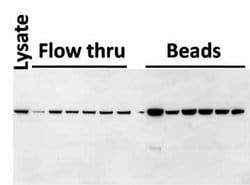

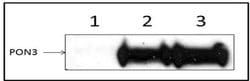
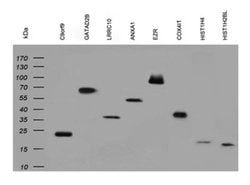
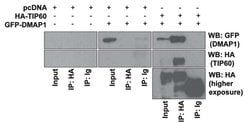

Description
- Synthetic peptide sequence is DYKDDDDK DDK (FLAG-tag, FLAG octapeptide, FLAG epitope) is a polypeptide protein tag that can be added to a protein using recombit DNA technology, having the sequence motif DYKDDDDK (where D=aspartic acid, Y=tyrosine, and K=lysine)
- It is an artificial antigen to which specific, high affinity monoclonal antibodies have been developed and hence can be used for protein purification by affinity chromatography and also can be used for locating proteins within living cells
- It has been used to separate recombit, overexpressed protein from wild-type protein expressed by the host organism
- It can also be used in the isolation of protein complexes with multiple subunits, because its mild purification procedure tends not to disrupt such complexes
- It has been used to obtain proteins of sufficient purity and quality to carry out 3D structure determination by x-ray crystallography.