CD9 Monoclonal Antibody (eBioKMC8 (KMC8)), Super Bright™ 600, eBioscience™, Invitrogen™
Manufacturer: Invitrogen
Select a Size
| Pack Size | SKU | Availability | Price |
|---|---|---|---|
| Each of 1 | 63-009-182-Each-of-1 | In Stock | ₹ 38,804.00 |
63-009-182 - Each of 1
In Stock
Quantity
1
Base Price: ₹ 38,804.00
GST (18%): ₹ 6,984.72
Total Price: ₹ 45,788.72
Antigen
CD9
Classification
Monoclonal
Concentration
0.2 mg/mL
Formulation
PBS with BSA and 0.09% sodium azide; pH 7.2
Gene Accession No.
P40240
Gene Symbols
CD9
Purification Method
Affinity chromatography
Regulatory Status
RUO
Gene ID (Entrez)
12527
Content And Storage
4° C, store in dark, DO NOT FREEZE!
Form
Liquid
Applications
Flow Cytometry
Clone
eBioKMC8 (KMC8)
Conjugate
Super Bright 600
Gene
CD9
Gene Alias
5H9; 5H9 antigen; antigen CD9; BA2; BA-2/p24 antigen; BTCC-1; CD9; CD9 antigen; CD9 antigen (p24); CD9 molecule; cell growth-inhibiting gene 2 protein; DRAP-27; GIG2; Leukocyte antigen MIC3; MIC3; motility related protein-1; Motility-related protein; MRP-1; p24; sCD 9; sCD9; soluble CD 9; soluble CD9; Tetraspanin29; Tetraspanin-29; transmembrane protein CD9; TSPAN29; Tspan-29
Host Species
Rat
Quantity
100 μg
Primary or Secondary
Primary
Target Species
Mouse
Product Type
Antibody
Isotype
IgG2a κ
Related Products


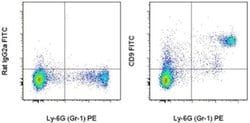

Description
- Rat Monoclonal Antibody CD9 antigen is a glycoprotein expressed on the surface of developing B lymphocytes, platelets, monocytes, eosinophils, basophil, stimulated T lymphocytes and by neurons and glial cells in the peripheral nervous system
- CD9 belongs to a family of membrane proteins termed tetraspanins which transverse the membrane four times
- In pre B cells and platelets, CD9 antigen regulates cell activation and aggregation possibly through an association with the integrin CD41 / CD61 (GPIIb / GPIIIa)
- CD9 is involved in cell motility, osteoclastogenesis, neurite outgrowth, myotube formation, and sperm-egg fusion, plays roles in cell attachment and proliferation and is necessary for association of heterologous MHC II molecules on the dendritic cell plasma membrane which is important for effective T cell stimulation
- CD9 functions in many cellular processes including differentiation, adhesion, and signal transduction, and expression plays a critical role in the suppression of cancer cell motility and metastasis
- CD9 is also considered as metastasis suppressor in solid tumors.