TIM-1 Recombinant Rabbit Monoclonal Antibody (21H16L1), Invitrogen™
Manufacturer: Invitrogen
Select a Size
| Pack Size | SKU | Availability | Price |
|---|---|---|---|
| Each of 1 | 70-332-4-Each-of-1 | In Stock | ₹ 42,720.00 |
70-332-4 - Each of 1
In Stock
Quantity
1
Base Price: ₹ 42,720.00
GST (18%): ₹ 7,689.60
Total Price: ₹ 50,409.60
Antigen
TIM-1
Classification
Monoclonal
Concentration
0.5 mg/mL
Formulation
PBS with 0.09% sodium azide; pH 7.4
Gene Accession No.
Q96D42
Gene Symbols
Havcr1
Immunogen
Protein corresponding to human CD365 [aa22-aa129]
Quantity
100 μg
Primary or Secondary
Primary
Target Species
Human
Product Type
Antibody
Isotype
IgG
Applications
Immunocytochemistry
Clone
21H16L1
Conjugate
Unconjugated
Gene
Havcr1
Gene Alias
AI503787; CD365; HAVCR; HAVCR1; HAVcr-1; Hepatitis A virus cellular receptor 1; hepatitis A virus cellular receptor 1 homolog; Kidney injury molecule 1; Kim1; KIM-1; T cell immunoglobin domain and mucin domain protein 1; t cell immunoglobulin and mucin domain-containing protein 1; T cell membrane protein 1; T-cell immunoglobulin and mucin domain containing 1; T-cell immunoglobulin and mucin domain-containing protein 1; T-cell immunoglobulin mucin family member 1; T-cell immunoglobulin mucin receptor 1; T-cell membrane protein 1; TIM; TIM1; TIM-1; TIMD1; TIMD-1
Host Species
Rabbit
Purification Method
Protein A
Regulatory Status
RUO
Gene ID (Entrez)
26762
Content And Storage
Store at 4°C short term. For long term storage, store at -20°C, avoiding freeze/thaw cycles.
Form
Liquid
Related Products



Description
- This antibody is predicted to react with Monkey, Sheep, Bovine
- Recombinant rabbit monoclonal antibodies are produced using in vitro expression systems
- The expression systems are developed by cloning in the specific antibody DNA sequences from immunoreactive rabbits
- Then, individual clones are screened to select the best candidates for production
- The advantages of using recombinant rabbit monoclonal antibodies include: better specificity and sensitivity, lot-to-lot consistency, animal origin-free formulations, and broader immunoreactivity to diverse targets due to larger rabbit immune repertoire
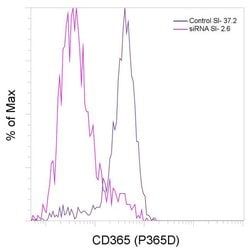
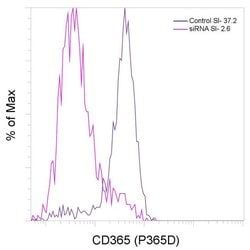
- CD365 also known as T-cell immunoglobulin and mucin domain 1 (Tim-1) is a type 1 surface glycoprotein that consists of extracellular N-terminal immunoglobulin V-like domain and a mucin domain, and a short cytoplasmic tail
- The endogenous ligand for CD365 is Tim-4
- In addition, CD365 is known to be a cellular receptor or co-receptor for a number of viruses including hepatitis A and C viruses, Ebola virus, Marburg virus, Dengue virus, Zika virus, West Nile virus, and Japanese encephalitis virus
- The direct binding of the viruses by CD365 occurs via phosphatildyl-serine exposed on viral envelopes
- Polymorphisms within human CD365 gene (HAVCR1) are associated with susceptibility to infection and the disease severity
- CD365 has also been implicated in the T cell co-stimulation
- CD365 is primarily expressed in epithelial cells
- It is also highly expressed in A549, 769-P and Caco-2 and cell lines
- CD365 exists also as a soluble protein generated by metalloproteinase mediated proteolytic cleavage of the surface protein.