GM-CSF Monoclonal Antibody (MP1-22E9), PE, eBioscience™, Invitrogen™
Rat Monoclonal Antibody
Manufacturer: Fischer Scientific
The price for this product is unavailable. Please request a quote
Antigen
GM-CSF
Concentration
0.2 mg/mL
Classification
Monoclonal
Form
Liquid
Regulatory Status
RUO
Formulation
PBS with 0.09% sodium azide; pH 7.2
Gene Alias
colony stimulating factor 2; colony stimulating factor 2 (granulocyte-macrophage); colony-stimulating factor; CSF; CSF2; Csfgm; cytokine; GMCSF; Gm-CSf; granulocyte macrophage colony stimulating factor; granulocyte macrophage-colony stimulating factor; granulocyte-macrophage colony stimulating factor 2; granulocyte-macrophage colony-stimulating factor; MGC131935; MGC138897; MGC151255; MGC151257; MGI-IGM; M-GM-CSF; molgramostin; put. GM-CSF; sargramostim
Gene Symbols
CSF2
Primary or Secondary
Primary
Content And Storage
4° C, store in dark, DO NOT FREEZE!
Gene
CSF2
Clone
MP1-22E9
Applications
Flow Cytometry
Conjugate
PE
Host Species
Rat
Target Species
Mouse
Gene Accession No.
P01587
Gene ID (Entrez)
12981
Isotype
IgG2a κ
Purification Method
Affinity chromatography
Product Type
Antibody
Related Products

Description
- Description: The MP1-22E9 antibody reacts with mouse granulocyte/macrophage - colony stimulating factor (GM-CSF)
- The MP1-22E9 antibody is a neutralizing antibody
- Mouse GM-CSF is a 14 kDa factor produced mainly by activated T cells and macrophages
- Other cell types, such as endothelium and fibroblasts, also secrete GM-CSF in response to TNF-alpha, IL-2, IL-1, and IFN-gamma
- GM-CSF stimulates growth of macrophages, granulocytes and dendritic cells
- GM-CSF is found as a membrane-bound form and also as a complex associated with the extracellular matrix
- Non-glycosylated GM-CSF is biologically active
- Applications Reported: MP1-22E9 has been reported for use in intracellular flow cytometric analysis
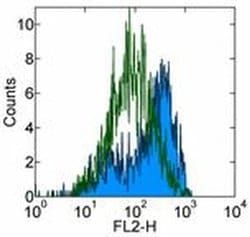
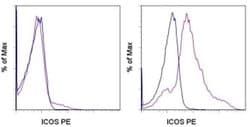
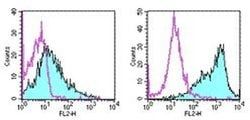
- Applications Tested: This MP1-22E9 antibody is tested by intracellular staining and flow cytometric analysis of cultured mouse splencoytes
- It is offered in 2 formats: - μg size: has been tested bu intracellular staining and flow cytometric analysis of cultured mouse splencoytes
- This can be used at less than or equal to 0.25 μg per test
- A test is defined as the amount (μg) of antibody that will stain a cell sample in a final volume of 100 μL
- Cell number should be determined empirically but can range from 10^5 to 10^8 cells/test
- It is recommended that the antibody be carefully titrated for optimal performance in the assay of interest
- The GM-CSF gene encodes for a cytokine that regulates the production, differentiation, and function of macrophages and granulocytes
- The active form of the protein exists as a homodimer in the extracellular space
- This gene is located in a cluster of related genes at the chromosome region 5q31, which has been associated with interstitial deletions in the 5q- syndrome and acute myelogenous leukemia
- Other genes in the cluster include interleukins 4, 5, and 13
- The gene is involved in promoting tissue inflammation
- Elevated levels of cytokines, including the one produced by this gene, have been observed in SARS-CoV-2 infected patients with acute respiratory distress syndrome
- Mice that lack this gene or its receptor have been shown to develop pulmonary alveolar proteinosis.