7068939
CD166 (ALCAM) Monoclonal Antibody (3A6), PE, eBioscience™, Invitrogen™
Mouse Monoclonal Antibody
Manufacturer: Fischer Scientific
The price for this product is unavailable. Please request a quote
Antigen
CD166 (ALCAM)
Concentration
5 μL/Test
Classification
Monoclonal
Form
Liquid
Regulatory Status
RUO
Formulation
PBS with 0.2% BSA and 0.09% sodium azide; pH 7.2
Gene Alias
activated leukocyte cell adhesion molecule; AI853494; ALCAM; BEN; CD166; CD166 antigen; cell adhesion molecule; DM-GRASP; FLJ38514; HB2; KG-CAM; MEMD; MGC71733; MuSC; Protein DM-GRASP; Protein MEMD; SB-10 antigen; SC1; unnamed protein product
Gene Symbols
ALCAM
Primary or Secondary
Primary
Content And Storage
4° C, store in dark, DO NOT FREEZE!
Gene
ALCAM
Clone
3A6
Applications
Flow Cytometry
Conjugate
PE
Host Species
Mouse
Target Species
Human
Gene Accession No.
Q13740
Gene ID (Entrez)
214
Isotype
IgG1 κ
Purification Method
Affinity chromatography
Product Type
Antibody
Related Products
Description
- Description: This 3A6 monoclonal antibody reacts with human CD166, which is also known as activated leukocyte cell adhesion molecule (ALCAM)
- CD166 is an immunoglobulin superfamily cell adhesion molecule that is broadly expressed on developing and adult hematopoietic (e.g., activated T and B cells, monocytes, and dendritic cells) and non-hematopoietic (e.g., neural, endothelial, and epithelial) tissues
- CD166 has also been detected in melanoma, colorectal carcinoma, as well as cancers of the breast, prostate, and bladder
- CD166 mediates cell-cell adhesion by forming low-affinity homophilic interactions (ALCAM-ALCAM) or high-affinity heterophilic interactions with its ligand CD6 (ALCAM-CD6)
- CD166 plays a role in development, inflammation, and neutrophil migration
- Moreover, its expression can be used as a prognostic marker for several cancers and has been reported to be a cancer stem cell marker
- The 3A6 antibody has been reported to induce the internalization of CD166 and its recycling back to the cell surface
- Applications Reported: This 3A6 antibody has been reported for use in flow cytometric analysis
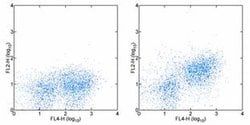
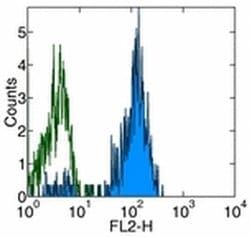
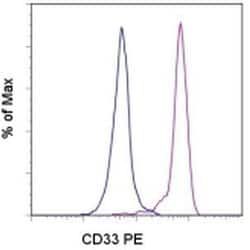
- Applications Tested: This 3A6 antibody has been pre-titrated and tested by flow cytometric analysis of normal human peripheral blood cells
- This can be used at 5 μL (0.06 μg) per test
- A test is defined as the amount (μg) of antibody that will stain a cell sample in a final volume of 100 μL
- This gene encodes activated leukocyte cell adhesion molecule (ALCAM), also known as CD166 (cluster of differentiation 166), which is a member of a subfamily of immunoglobulin receptors with five immunoglobulin-like domains (VVC2C2C2) in the extracellular domain
- This protein binds to T-cell differentiation antigene CD6, and is implicated in the processes of cell adhesion and migration
- Multiple alternatively spliced transcript variants encoding different isoforms have been found.