Galectin 3 Monoclonal Antibody (eBioM3/38 (M3/38)), eBioscience™, Invitrogen™
Rat Monoclonal Antibody
Manufacturer: Fischer Scientific
The price for this product is unavailable. Please request a quote
Antigen
Galectin 3
Concentration
0.5 mg/mL
Classification
Monoclonal
Form
Liquid
Regulatory Status
RUO
Formulation
PBS with 0.09% sodium azide; pH 7.2
Gene Alias
35 kDa lectin; advanced glycation end-product receptor 3; AGE-R3; beta-galactosides-binding lectin; carbohydrate-binding protein 35; CBP 35; CBP30; CBP-30; CBP35; epsilon BP; gal3; gal-3; galactose-specific lectin 3; Galactoside-binding protein; GALBP; galectin 3; Galectin3; galectin-3; GALIG; GBP; IgE binding protein; igE-binding protein; L-29; L31; L-31; L-34; L-34 galactoside-binding lectin; Laminin-binding protein; lectin galactoside-binding soluble 3; lectin galactoside-binding soluble 3 protein; lectin L-29; lectin, galactose binding, soluble 3; lectin, galactoside binding soluble 3; lectin, galactoside-binding, soluble, 3; lectin, galactoside-binding, soluble, 3 (galectin 3); LGALS2; Lgals3; MAC2; Mac-2; Mac-2 antigen
Gene Symbols
LGALS3
Primary or Secondary
Primary
Content And Storage
4° C
Gene
LGALS3
Clone
eBioM3/38 (M3/38)
Applications
ELISA, Flow Cytometry, Immunocytochemistry, Immunohistochemistry (Frozen), Immunohistochemistry (Paraffin), Immunoprecipitation, Western Blot
Conjugate
Unconjugated
Host Species
Rat
Target Species
Human, Mouse
Gene Accession No.
P16110, P17931
Gene ID (Entrez)
16854, 3958
Isotype
IgG2a κ
Purification Method
Affinity chromatography
Product Type
Antibody
Related Products



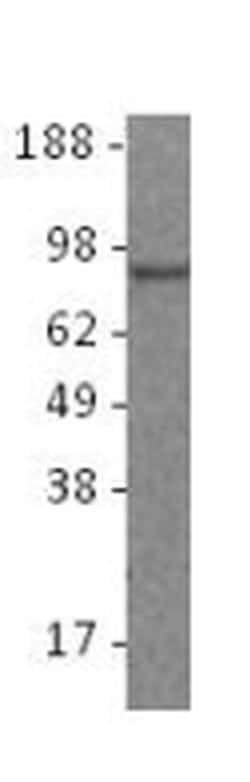
Description
- Description: The eBioM3/38 antibody reacts with mouse Galectin-3 (Mac-2)
- Galectins are a family of animal lectins which appear to exhibit a variety of biological functions
- Galectin 3 (aka LGALS3, galactose-specific soluble lectin 3, Mac-2, L-29) is one of the more extensively studied members of this family and is a 30 kDa beta-galactoside-binding protein
- Due to a C-terminal carbohydrate binding site, Galectin 3 is capable of binding IgE and mammalian cell surfaces only when homodimerized or homo-oligomerized
- Galectin 3 is normally distributed in epithelia of many organs and various inflammatory cells, including macrophages, as well as dendritic cells and Kupffer cells
- The expression of this lectin is up-regulated during inflammation, cell proliferation, cell differentiation and through trans-activation by viral proteins
- This monoclonal antibody eBioM3/38 crossreacts to human Galectin-3 (LGALS3)
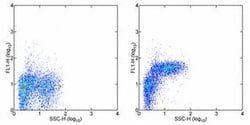
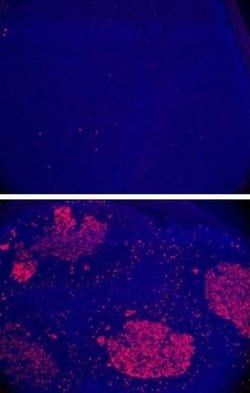
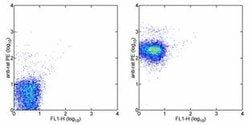
- Applications Reported: This eBioM3/38 (M3/38) antibody has been reported for use in flow cytometric analysis, immunoprecipitation, immunoblotting (WB), immunohistology staining of frozen tissue sections, immunohistology staining of paraffin embedded tissue sections, and ELISA
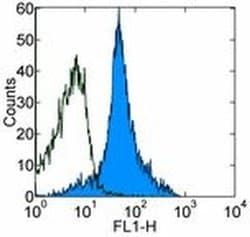
- Applications Tested: This eBioM3/38 (M3/38) antibody has been tested by flow cytometric analysis of mouse PECs (thioglycollated elicied peritioneal cells)
- This can be used at less than or equal to 0.25 μg per test
- Galactose-specific lectin which binds IgE
- May mediate with the alpha-3, beta-1 integrin the stimulation by CSPG4 of endothelial cells migration
- Together with DMBT1, required for terminal differentiation of columnar epithelial cells during early embryogenesis
- In the nucleus: acts as a pre-mRNA splicing factor
- Involved in acute inflammatory responses including neutrophil activation and adhesion, chemoattraction of monocytes macrophages, opsonization of apoptotic neutrophils, and activation of mast cells.