CD265 (RANK) Monoclonal Antibody (R12-31), eBioscience™, Invitrogen™
Rat Monoclonal Antibody
Manufacturer: Fischer Scientific
The price for this product is unavailable. Please request a quote
Antigen
CD265 (RANK)
Concentration
0.5 mg/mL
Classification
Monoclonal
Form
Liquid
Regulatory Status
RUO
Formulation
PBS with 0.09% sodium azide; pH 7.2
Gene Alias
CD265; FEO; LOH18CR1; loss of heterozygosity, 18, chromosomal region 1; Ly109; mRANK; ODFR; OFE; OPTB7; Osteoclast differentiation factor receptor; OSTS; Paget disease of bone 2; PDB2; Rank; receptor activator of NF-kappaB; receptor activator of NF-KB; receptor activator of nuclear factor-kappa B; RGD1563614; TNF receptor superfamily member 11a; Tnfrsf11a; TRANCER; TRANCE-R; tumor necrosis factor receptor superfamily member 11A; tumor necrosis factor receptor superfamily member 11a, NFKB activator; tumor necrosis factor receptor superfamily, member 11a, NFKB activator
Gene Symbols
TNFRSF11A
Primary or Secondary
Primary
Content And Storage
4° C
Gene
TNFRSF11A
Clone
R12-31
Applications
Flow Cytometry
Conjugate
Unconjugated
Host Species
Rat
Target Species
Mouse
Gene Accession No.
O35305
Gene ID (Entrez)
21934
Isotype
IgG2a κ
Purification Method
Affinity chromatography
Product Type
Antibody
Related Products
Description
- Description: The R12-31 monoclonal antibody reacts with mouse RANK (Receptor activator of NF-kappaB), a recently cloned member of the TNFR superfamily with no significant homology to other members of this family
- RANK ligand (RANKL/TRANCE/ OPGL) binds to RANK on dendritic cells, upregulates the expression of anti-apoptotic protein BcL-XL suggesting a role in dendritic cell survival
- The cytoplasmic domain of RANK interacts with TRAF2, TRAF5 and TRAF6
- Overexpression of RANK activates NF-kappaB and c-Jun-terminal kinase (JNK) pathways
- Recent studies have shown that RANK interaction with TRAF6 activates NF-kappaB, whereas JNK activation is mediated through binding of RANK to TRAF2
- Applications Reported: The R12-31 antibody has been reported for use in flow cytometric analysis
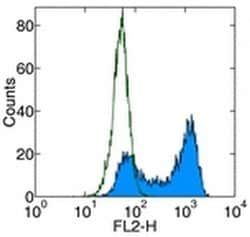
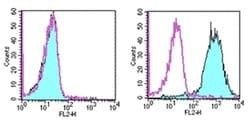
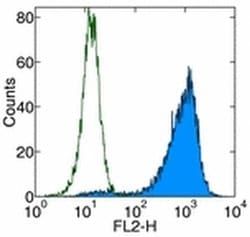
- Applications Tested: The R12-31 antibody has been tested by flow cytometric analysis of mouse RANK transfected cells
- This can be used at less than or equal to 1 μg per test
- A test is defined as the amount (μg) of antibody that will stain a cell sample in a final volume of 100 μL
- Cell number should be determined empirically but can range from 10^5 to 10^8 cells/test
- It is recommended that the antibody be carefully titrated for optimal performance in the assay of interest
- Purity: Greater than 90%, as determined by SDS-PAGE
- Aggregation: Less than 10%, as determined by HPLC
- Filtration: 0.2 μm post-manufacturing filtered
- RANK is a member of the tumor necrosis factor receptor (TNFR) family
- The full length mouse RANK cDNA encodes a type I transmembrane protein with an extracellular and a cytoplasmic domain
- The extracellular domain contains two potential N-linked glycosylation sites
- RANK shares significant amino acid homology with other members of the TNFR family in its extracellular four cysteine-rich repeats
- Human and murine RANK share 81% amino acid identity in their extracellular domains.