7091694
IL-17A Monoclonal Antibody (eBio64DEC17), eBioscience™, Invitrogen™
Mouse Monoclonal Antibody
Manufacturer: Fischer Scientific
The price for this product is unavailable. Please request a quote
Antigen
IL-17A
Concentration
0.5 mg/mL
Classification
Monoclonal
Form
Liquid
Regulatory Status
RUO
Formulation
PBS with 0.09% sodium azide; pH 7.2
Gene Alias
Ctla8; CTLA-8; cytokine; cytotoxic T-lymphocyte-associated antigen 8; cytotoxic T-lymphocyte-associated protein 8; il 17; Il17; IL-17; IL17A; IL-17a; ILN; Interleukin; interleukin 17; interleukin 17 (cytotoxic T-lymphocyte-associated serine esterase 8); interleukin 17 precursor; interleukin 17A; interleukin-17; Interleukin17A; interleukin-17A; R-IL-17-A
Gene Symbols
IL17A
Primary or Secondary
Primary
Content And Storage
4° C
Gene
IL17A
Clone
eBio64DEC17
Applications
ELISA, Immunohistochemistry (Frozen)
Conjugate
Unconjugated
Host Species
Mouse
Target Species
Human
Gene Accession No.
Q16552
Gene ID (Entrez)
3605
Isotype
IgG1 κ
Purification Method
Affinity chromatography
Product Type
Antibody
Related Products


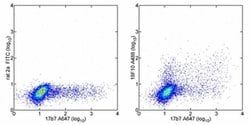
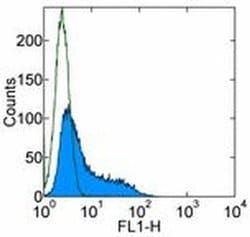

Description
- Description: The eBio64DEC17 antibody reacts with human IL-17A
- The eBio64DEC17 antibody is a neutralizing antibody
- Interleukin-17A (IL-17A) is a CD4+ T cell-derived cytokine that promotes inflammatory responses in cell lines and is elevated in rheumatoid arthritis, asthma, multiple sclerosis, psoriasis, and transplant rejection
- The cDNA encoding human IL-17A was isolated from a library of CD4+ T cells; the encoded protein exhibits 72 percent amino acid identity with HVS13 , an open reading frame from a T lymphotropic Herpesvirus saimiri, and 63 percent with mouse CTLA-8 (cytotoxic T-lymphocyte associated antigen-8)
- Human IL-17A exists as glycosylated 20-30 kD homodimers
- High levels of IL-17A homodimer are produced by activated peripheral blood CD4+ T-cells
- IL-17A enhances expression of the intracellular adhesion molecule-1 (ICAM-1) in human fibroblasts
- Human IL-17A also stimulates epithelial, endothelial, or fibroblastic cells to secrete IL-6, IL-8, G-CSF, and PGE2
- In the presence of human IL-17A, fibroblasts can sustain the proliferation of CD34+ hematopoietic progenitors and induce maturation into neutrophils
- Mouse, rat, and human IL-17A can induce IL-6 secretion in mouse stromal cells, indicating that all homologs can recognize the mouse IL-17A receptor
- Interleukin-17A (IL-17A, CTLA-8) is a CD4+ T cell-derived cytokine that promotes inflammatory responses in cell lines and is elevated in rheumatoid arthritis, asthma, multiple sclerosis, psoriasis, and transplant rejection
- IL-17A is a 32 kDa long, disulfide-linked homodimer consisting of 136 amino acids that is a member of a six-species family of proteins (IL-17A-17F) and signals through the IL-17 receptor (IL-17R/CDw217)
- High levels of IL-17A homodimer are produced by activated peripheral blood CD4+ T-cells, and IL-17A also enhances expression of the intracellular adhesion molecule-1 (ICAM-1) in human fibroblasts
- In particular, human IL-17A also stimulates epithelial, endothelial, or fibroblastic cells to secrete IL-6, IL-8, G-CSF, and PGE2
- In the presence of human IL-17A, fibroblasts can sustain the proliferation of CD34+ hematopoietic progenitors and induce maturation into neutrophils
- Mouse, rat, and human IL-17A can induce IL-6 secretion in mouse stromal cells, indicating that all homologs can recognize the mouse receptor
- IL-17A regulates the activities of NF-kappa B and mitogen-activated protein kinases, stimulates the expression of IL-6 and cyclooxygenase-2 (PTGS2/COX-2), and enhances the production of nitric oxide (NO).