7143938
FUS Recombinant Rabbit Monoclonal Antibody (BLR023E), Bethyl Laboratories
Rabbit Recombit Monoclonal Antibody
Manufacturer: Fischer Scientific
The price for this product is unavailable. Please request a quote
Antigen
FUS
Applications
Immunocytochemistry, Immunofluorescence, Immunohistochemistry, Immunoprecipitation, Western Blot
Conjugate
Unconjugated
Host Species
Rabbit
Target Species
Human, Mouse
Gene Accession No.
P35637, P56959
Gene ID (Entrez)
233908, 2521
Isotype
IgG
Purification Method
Protein A
Product Type
Antibody
Clone
BLR023E
Classification
Recombinant Monoclonal
Form
Liquid
Regulatory Status
RUO
Formulation
BBS with 0.1% BSA and 0.09% sodium azide; pH 8.2
Gene Alias
ALS6, FUS1, HNRNPP2, POMP75, TLS, 75 kDa DNA-pairing protein, RNA-binding protein FUS, fus-like protein, fusion gene in myxoid liposarcoma, heterogeneous nuclear ribonucleoprotein P2, oncogene FUS, oncogene TLS, translocated in liposarcoma protein
Immunogen
Between 1 and 50
Primary or Secondary
Primary
Content And Storage
4° C
Gene
FUS
Related Products




Description
- The recommended shelf life for this product is 1 year from date of receipt
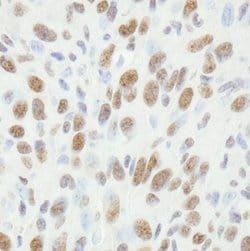
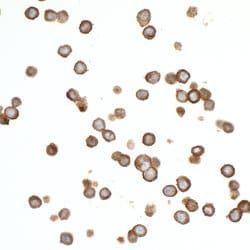
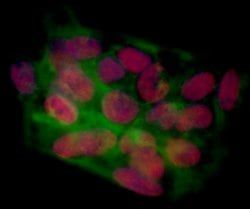
- Application Note: For ICC, epitope retrieval with citrate buffer pH 6.0 is recommended for FFPE cell sections
- For IHC, epitope retrieval with citrate buffer pH 6.0 is recommende FUS/TLS was originally described as fused in Sarcoma is actually related to a number of different cellular processes and correlated to several diseases
- FUS binds DNA as a single or double strand, and acts as a site for transcription factors to recognize
- Since FUS is well-documented to be involved in liposarcoma, lipoma and leukaemia, it is believed that when its normal housekeeping functions related to transcription are disrupted, normal cells become cancerous
- Interestingly, FUS is also associated with the fatal neuron disorder amyotrophic lateral sclerosis; interruption of its normal RNA-binding functions leads to incorrect cellular localization and leads to pathologies of the neuron
- Thus, FUS regulation of cellular functions is a critical component of maintece of healthy cells.