phospho-Tau (Ser235), Mouse anti-Human, Mouse, Clone: RN235, Millipore Sigma™
Mouse Monoclonal Antibody
Manufacturer: Fischer Scientific
The price for this product is unavailable. Please request a quote
Antigen
phospho-Tau (Ser235)
Dilution
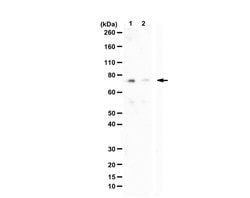
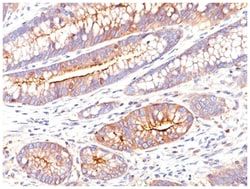
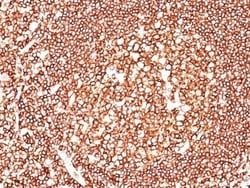
Immunohistochemistry (Paraffin) Analysis: A 1:500 dilution from a representative lot detected phospho-tau (Ser235) in human Alzheimer's diseas (AD) brain tissue sections.Dot Blot analysis: A representative lot detected phosphorylated recombinant human tau (pSer235), but not the non-phosphorylated recombinant human tau (Tau). (Courtesy of Rebecca Nisbet, Ph.D., University of Queensland, Brisbane, Austraila).Immunofluorescence Analysis: A representative lot detected phospho-tau (Ser235) in K3 and rTg4510 tau transgenic mouse brains (Courtesy of Rebecca Nisbet, Ph.D., University of Queensland, Brisbane, Austraila).Immunohistochemistry (Paraffin) Analysis: A representative lot detected phospho-Tau (Ser235) in human Alzheimer s disease (AD) brain tissue sections. (Courtesy of Rebecca Nisbet, Ph.D., University of Queensland, Brisbane, Austraila).ELISA Analysis: A representative lot full-length human recombinant phospho-tau (Ser235) or GSK-3 beta phosphorylated tau (pTau), but not the non-ph
Classification
Monoclonal
Form
Purified
Regulatory Status
RUO
Target Species
Human, Mouse
Gene Alias
Microtubule-associated protein tau;Neurofibrillary tangle protein;Paired helical filament-tau;PHF-tau
Gene Symbols
MAPT;MAPTL;MTBT1;TAU
Isotype
IgG1 κ
Purification Method
Protein G purified
Test Specificity
Clone RN235 is a mouse monoclonal antibody that detects microtubule-associated protein tau (MAPT) phosphorylated on serine 235 of isoform Tau-C. It targets an epitope with in 12 amino acids surround pSer235. This sequence is also conserved in isoform Tau-F.
Clone
RN235
Applications
Dot Blot, ELISA, Immunofluorescence, Immunohistochemistry (Paraffin), Western Blot
Conjugate
Unconjugated
Host Species
Mouse
Research Discipline
Neuroscience
Formulation
Purified mouse monoclonal antibody IgG1 in buffer containing 0.1 M Tris-Glycine (pH 7.4), 150 mM NaCl with 0.05% sodium azide.
Gene ID (Entrez)
NP_001116538
Immunogen
KLH-conjugated linear peptide corresponding to 12 amino acids surrounding phospho serine 235 of human tau-C.
Primary or Secondary
Primary
Content And Storage
Stable for 1 year at 2-8°C from date of receipt.
Related Products

Description
- Anti-phospho-Tau (Ser235), clone RN235, Cat
- No
- MABN2275, is a highly specific mouse monoclonal antibody that targets Microtubule-associated protein tau and has been tested for use in Dot Blot, ELISA, Immunohistochemistry (Paraffin), Immunofluorescence, and Western Blotting
- Microtubule-associated protein tau (UniProt: P10636; also known as Neurofibrillary tangle protein, Paired helical filament-tau, PHF-tau) is encoded by the MAPT (also known as MAPTL, MTBT1, TAU) gene (Gene ID: 4137) in human
- Tau, a highly asymmetric and heat-stable protein, is expressed mainly in the brain, where it regulates the stability and orientation of microtubules in neurons, astrocytes, and oligodendrocytes
- Tau protein is reported to be the predominant component of the paired helical filaments (PHFs) and neurofibrillary tangles (NFTs) that are characteristic of pathological brain lesions in Alzheimer s disease
- The dephosphorylation of Tau protein promotes rapid and extensive microtubule polymerization, while the phosphorylation of Tau decreases its ability to promote microtubule assembly
- Tau is a substrate for a multitude of protein kinases, including CaM kinase II, casein kinase II, protein kinase A (PKA), MAP kinase (ERK2), Cdk5/ p35, and glycogen synthase kinase-3 (GSK-3) and is phosphorylated at many different sites in Alzheimer s disease brain
- It is believed that the phosphorylation of specific sites, rather than the overall extent of phosphorylation, is important in modulating the ability of Tau to bind microtubules and promote microtubule assembly
- This antibody (clone RN235) specifically reacts with tau phosphorylated at serine 235, and detects intraneuronal NFTs (iNFTs), and extraneuronal NFTs (eNFTs) in the brain tissue
- Although theoretically it can also react with phospho Thr231, but EC50 is very high compared to reactivity with phospho Ser235 (407 nM vs 0.61 nM)
- (Ref.: Brici, D., et al
- (2018)
- J
- Alzheimer s Dis
- 61(3); 899-905).