MINA Polyclonal Antibody, Active Motif™
Rabbit Polyclonal Antibody
Manufacturer: Fischer Scientific
The price for this product is unavailable. Please request a quote
Antigen
MINA
Applications
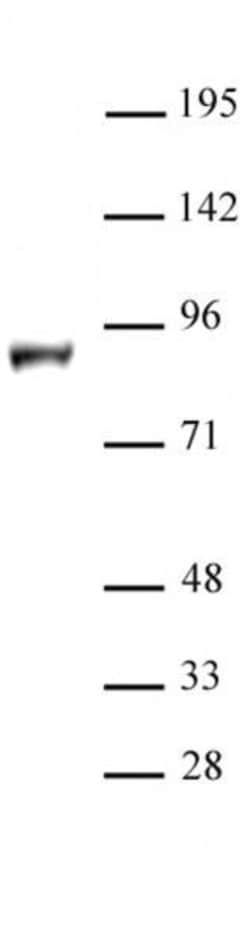
Western Blot
Conjugate
Unconjugated
Host Species
Rabbit
Target Species
Human
Gene Accession No.
Q8IUF8
Gene ID (Entrez)
84864
Immunogen
This antibody was raised against a peptide within the C-terminal region of human MINA.
Primary or Secondary
Primary
Content And Storage
-20°C, Avoid Freeze/Thaw Cycles
Gene
RIOX2
Concentration
Lot-Specific
Classification
Polyclonal
Form
Liquid
Regulatory Status
RUO
Formulation
PBS with 30% glycerol and 0.035% sodium azide; pH 7.5
Gene Alias
1810047J07Rik; 2410057H13Rik; 3830408E23Rik; 60S ribosomal protein L27a histidine hydroxylase; AI449204; Bifunctional lysine-specific demethylase and histidyl-hydroxylase MINA; DKFZp762O1912; FLJ14393; Histone lysine demethylase MINA; MDIG; Mina; mina {ECO:0000312; MINA53; Mina-53; mineral dust induced gene protein; Mineral dust-induced gene protein; myc induced nuclear antigen; MYC-induced nuclear antigen; myc-induced nuclear antigen, 53 kDa; NO52; Nucleolar protein 52; Protein mina53; RGD:708521}; Ribosomal oxygenase 2; Ribosomal oxygenase MINA; Riox2; ROX
Gene Symbols
RIOX2
Isotype
IgG
Purification Method
Antigen affinity chromatography
Product Type
Antibody
Related Products
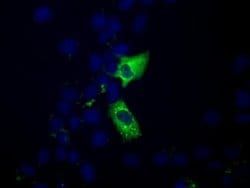
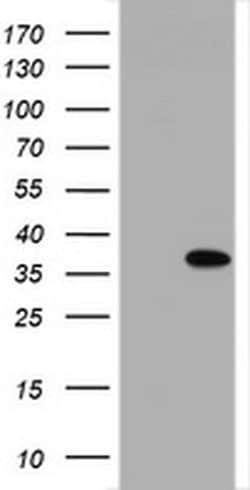

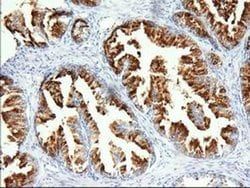
Description
- MINA is nuclear localized, myc-inducible protein that is thought to play a role in mammalian cell proliferation
- Treatment of cancer cells lines such as the colon cancer cell line SW680 with siRNA against MINA inhibits cell growth, demonstrating that MINA may be a potential therapeutic target
- MINA regulates several genes related to cell adhesion and metabolism that have also been shown to be regulated by c-Myc, but also regulates other genes whose expression are not modulated by c-Myc such as EGFR, IL-6 and HGF
- MINA has also been found to act as a repressor to IL-4 expression in T cells, indicating that it may also play a role in T cell differentiation and genetic variation in T helper type 2 bias.