7218815
CD271 (NGF Receptor) Monoclonal Antibody (ME20.4), eBioscience™, Invitrogen™
Mouse Monoclonal Antibody
Manufacturer: Fischer Scientific
The price for this product is unavailable. Please request a quote
Antigen
CD271 (NGF Receptor)
Concentration
0.5 mg/mL
Conjugate
Unconjugated
Host Species
Mouse
Target Species
Canine, Human, Mouse, Non-human Primate, Ovine, Porcine, Rabbit, Rat
Gene Accession No.
P07174, P08138, Q9Z0W1
Isotype
IgG1 κ
Purification Method
Affinity chromatography
Product Type
Antibody
Clone
ME20.4
Classification
Monoclonal
Form
Liquid
Regulatory Status
RUO
Formulation
PBS with 0.09% sodium azide; pH 7.2
Gene ID (Entrez)
100349095, 100525607, 101119064, 18053, 24596, 4804, 491071
Primary or Secondary
Primary
Content And Storage
4° C
Gene
Ngfr
Related Products


Description
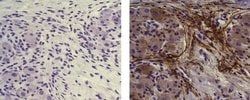
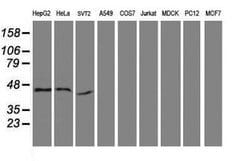
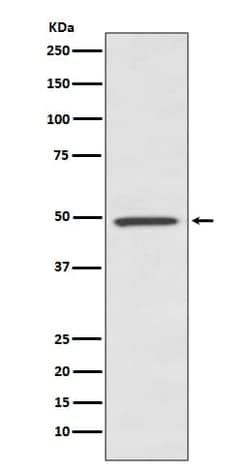
- The MAb ME20.4 recognizes CD271, a 75 kDa type I transmembrane protein that belongs to the low-affinity neurotrophin receptor and tumor necrosis factor receptor superfamily
- CD271 is expressed by neurons, Schwann cells, melanocytes, mesenchymal stem/stromal cells, neural crest stem cells, astrocytes, oligodendrocytes, and a subset of lymphoid cells including follicular dendritic cells
- CD271 binds to the ligands NGF, BDNF, NTF3, and NTF4
- CD271 contains a death domain which induces apoptosis and regulates cell growth and proliferation through interactions with TRAF2, TRAF4, TRAF6, PTPN13, and RANBP9
- The ME20.4 MAb recognizes human, Non-human Primate, mouse, rat, sheep, rabbit, cat, dog, and pig CD271
- Neurotrophic factors control the survival, differentiation and maintenance of neurons in the peripheral and central nervous systems, and of other neural crest-derived cell types
- Developing sympathetic neurons are absolutely dependent upon nerve growth factor (NGF) during the period of target competition in vivo
- Antibodies reacting specifically with NGFR p75 are useful tools in the detection and characterization of NGFR p75, to enhance our understanding of a wide range of phenomena in the development, plasticity and repair of the nervous system.