CD314 (NKG2D) Monoclonal Antibody (1D11), Brilliant Ultra Violet™ 615, eBioscience™, Invitrogen™
Mouse Monoclonal Antibody
Manufacturer: Fischer Scientific
The price for this product is unavailable. Please request a quote
Antigen
CD314 (NKG2D)
Concentration
5 μL/Test
Classification
Monoclonal
Form
Liquid
Regulatory Status
RUO
Formulation
PBS with BSA and 0.09% sodium azide; pH 7.2
Gene Alias
CD314; D12S2489E; D6H12S2489E; killer cell lectin like receptor K1; Killer cell lectin-like receptor subfamily K member 1; killer cell lectin-like receptor subfamily K, member 1; KLR; Klrk1; natural killer cell group 2D; natural killer cell receptor; NK cell receptor D; NK lectin-like receptor; Nkg2d; NKG2-D; NKG2-D type II integral membrane protein; NKG2-D-activating NK receptor; NKLLR; Nkrp2; NKR-P2; NKR-P2, ortholog of human NKG2D
Gene Symbols
Klrk1
Primary or Secondary
Primary
Content And Storage
4° C, store in dark, DO NOT FREEZE!
Gene
Klrk1
Clone
1D11
Applications
Flow Cytometry
Conjugate
Brilliant Ultraviolet 615
Host Species
Mouse
Target Species
Human
Gene Accession No.
P26718
Gene ID (Entrez)
22914
Isotype
IgG1 κ
Purification Method
Affinity chromatography
Product Type
Antibody
Related Products
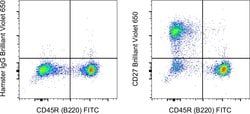
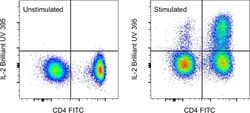
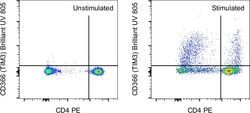

Description
- Natural killer (NK) cells are lymphocytes that can mediate lysis of certain tumor cells and virus-infected cells without previous activation
- NK cells can regulate specific humoral and cell-mediated immunity, and preferentially express several calcium-dependent (C-type) lectins, which have been implicated in the regulation of NK cell function
- The NK gene encodes a member of the NKG2 family, and the encoded transmembrane protein is characterized by a type II membrane orientation (extracellular C terminus) and the presence of a C-type lectin domain
- The NKG2 gene family is located within the NK complex, a region that contains several C-type lectin genes preferentially expressed in NK cells.