FAP Monoclonal Antibody (C1), Invitrogen™
Mouse Monoclonal Antibody
Manufacturer: Fischer Scientific
The price for this product is unavailable. Please request a quote
Antigen
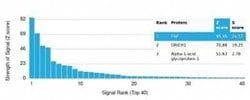
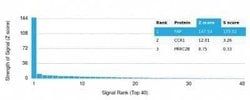
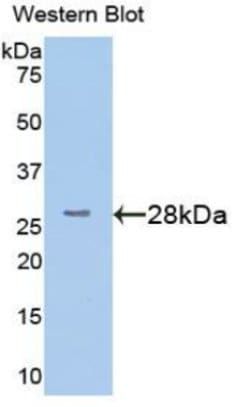
FAP
Concentration
1 mg/mL
Classification
Monoclonal
Form
Liquid
Regulatory Status
RUO
Formulation
PBS with 50% glycerol and 0.05% ProClin 300
Gene Alias
170 kDa melanoma membrane-bound gelatinase; Antiplasmin-cleaving enzyme FAP, soluble form; APCE; Dipeptidyl peptidase FAP; DPPIV; Fap; FAPA; FAPalpha; fibroblast activation protein; fibroblast activation protein alpha; fibroblast activation protein, alpha; gelatine degradation protease FAP; Integral membrane serine protease; post-proline cleaving enzyme; Prolyl endopeptidase FAP; seprase; Serine integral membrane protease; SIMP; Surface-expressed protease
Gene Symbols
FAP
Isotype
IgG2b κ
Purification Method
Protein A/G
Product Type
Antibody
Clone
C1
Applications
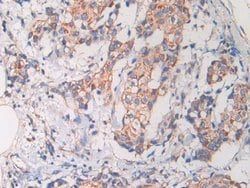
Immunohistochemistry (Paraffin)
Conjugate
Unconjugated
Host Species
Mouse
Target Species
Human
Gene Accession No.
Q12884
Gene ID (Entrez)
2191
Immunogen
Ile523-Asp760 (Accession Q12884), with N-terminal His Tag
Primary or Secondary
Primary
Content And Storage
-20°C
Gene
FAP
Related Products

Description
- The protein encoded by this gene is a homodimeric integral membrane gelatinase belonging to the serine protease family
- It is selectively expressed in reactive stromal fibroblasts of epithelial cancers, granulation tissue of healing wounds, and malignant cells of bone and soft tissue sarcomas
- This protein is thought to be involved in the control of fibroblast growth or epithelial-mesenchymal interactions during development, tissue repair, and epithelial carcinogenesis.