7240937
Cathelicidin Monoclonal Antibody (C1), Invitrogen™
Mouse Monoclonal Antibody
Manufacturer: Fischer Scientific
The price for this product is unavailable. Please request a quote
Antigen
Cathelicidin
Concentration
1 mg/mL
Classification
Monoclonal
Form
Liquid
Regulatory Status
RUO
Formulation
PBS with 50% glycerol and 0.05% ProClin 300
Gene Alias
18 kDa cationic antimicrobial protein; Antibacterial peptide FALL-39; Antibacterial peptide LL-37; Camp; CAP18; CAP-18; Cathelicidin antimicrobial peptide; cathelin-like protein; Cathelin-related antimicrobial peptide; CLP; Cnlp; CRAMP; FALL39; FALL-39; FALL-39 peptide antibiotic; hCAP18; hCAP-18; HSD26; LL37; MCLP
Gene Symbols
CAMP
Isotype
IgG2a κ
Purification Method
Protein A/G
Product Type
Antibody
Clone
C1
Applications
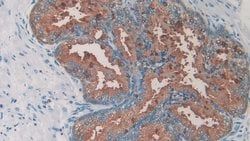
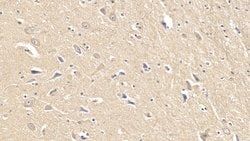
Immunohistochemistry (Paraffin)
Conjugate
Unconjugated
Host Species
Mouse
Target Species
Human
Gene Accession No.
P49913
Gene ID (Entrez)
820
Immunogen
Gln31-Ser170 (Accession P49913), with N-terminal His Tag
Primary or Secondary
Primary
Content And Storage
-20°C
Gene
CAMP
Related Products


Description
- Cathelicidin is an epithelial-derived antimicrobial protein found in specific granules of polymorphonuclear leukocytes of bone marrow, testis and neutrophils
- Cathelicidins are one family of antimicrobial peptides characterized by conserved pro-peptide sequences that have been identified in epithelial tissues and some myeloid cells of humans and animals
- LL-37/hCAP-18 is the only Cathelicidin found in humans and is expressed in inflammatory and epithelial cells
- The presence of these molecules is essential for defense against invasive bacterial infection in skin
- Besides their direct antimicrobial function, Cathelicidins have multiple roles in mediating innate and adaptive immunity, such as endotoxin neutralizing, angiogenesis, wound healing and promoting neutrophil chemotaxis and mast cell recruitment
- Cathelicidin antimicrobial peptides qualify as prototypes of innovative drugs that may be used to treat infection and/or modulate the immune response.