7240981
MXRA5 Polyclonal Antibody, Invitrogen™
Rabbit Polyclonal Antibody
Manufacturer: Fischer Scientific
The price for this product is unavailable. Please request a quote
Antigen
MXRA5
Applications
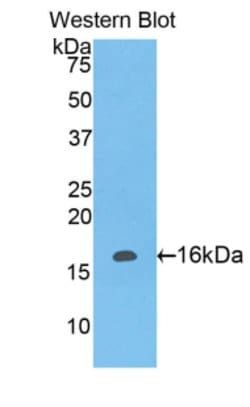
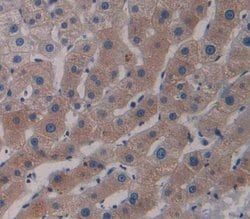
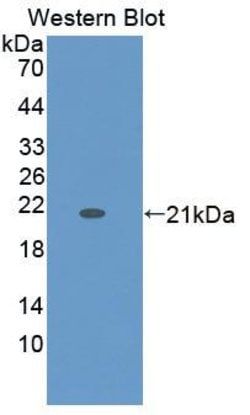
Immunohistochemistry (Paraffin), Western Blot
Conjugate
Unconjugated
Host Species
Rabbit
Target Species
Human
Gene Accession No.
Q9NR99
Gene ID (Entrez)
25878
Immunogen
Pro2542-Phe2828 (Accession Q9NR99), with N-terminal His Tag
Primary or Secondary
Primary
Content And Storage
-20°C
Gene
MXRA5
Concentration
0.5 mg/mL
Classification
Polyclonal
Form
Liquid
Regulatory Status
RUO
Formulation
PBS with 50% glycerol and 0.05% ProClin 300
Gene Alias
Adhesion protein with leucine-rich repeats and immunoglobulin domains related to perlecan; adlican; matrix remodeling associated 5; matrix-remodeling-associated protein 5; matrix-remodelling associated 5; MXRA5
Gene Symbols
MXRA5
Isotype
IgG
Purification Method
Antigen affinity chromatography
Product Type
Antibody
Related Products
Description
- Matrix-remodeling-associated protein 5 (MXRA5), also known as adhesion protein with leucine-rich repeats and immunoglobulin domains related to perlecan (Adlican), is a 2,828 amino acid secretory protein
- Containing 12 Ig-like C2-type domains and 7 LRR repeats, MXRA5 is a member of the leucine-rich repeat and Ig domain-containing (LRRIG) family of proteins
- MXRA5 expression, while decreasing with age from youth until late adulthood, increases from late adulthood through late elderhood
- Most notably, NXRA5 has been shown to be overexpressed in centenarians
- This expression pattern suggests a role of MXRA5 in the biology of aging and longevity.