74-000-6MP647
Occludin Recombinant Mouse Monoclonal Antibody (OC-3F10), Alexa Fluor™ Plus 647, Invitrogen™
Manufacturer: Fischer Scientific
Select a Size
| Pack Size | SKU | Availability | Price |
|---|---|---|---|
| Each of 1 | 74-000-6MP647-Each-of-1 | In Stock | ₹ 25,721.00 |
74-000-6MP647 - Each of 1
In Stock
Quantity
1
Base Price: ₹ 25,721.00
GST (18%): ₹ 4,629.78
Total Price: ₹ 30,350.78
Antigen
Occludin
Classification
Recombinant Monoclonal
Concentration
1.0 mg/mL
Formulation
proprietary buffer with 0.008% Bromonitrodioxane, 0.008% Methylisothiazolone, pH 6.5
Gene Accession No.
Q16625
Gene Symbols
OCLN
Immunogen
GST fusion protein consisting of the C-terminal region (∽150aa) of human occludin.
Quantity
50 μL
Primary or Secondary
Primary
Target Species
Human
Form
Liquid
Applications
Flow Cytometry, Immunocytochemistry
Clone
OC-3F10
Conjugate
Alexa Fluor Plus 647
Gene
OCLN
Gene Alias
AI503564, BLCPMG, Occludin, occludin 1B, Ocl, Ocln, phosphatase 1, regulatory subunit 115, PPP1R115, tight junction protein occludin, tight junction structural protein
Host Species
Mouse
Purification Method
Protein A/G
Regulatory Status
RUO
Gene ID (Entrez)
100506658
Content And Storage
4°, C, store in dark, DO NOT FREEZE!
Isotype
IgG1 κ
Related Products
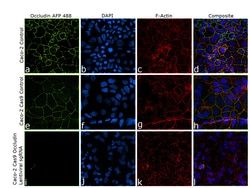

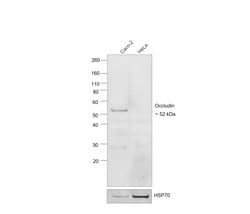


Description
- Description Occludin is a 65 kDa protein that can exist in a variety of phosphorylated forms, ranging up to approximately 82 kDa
- Occludin is thought to be involved in regulating both the localization and the function of occludin
- Polyunsaturated fatty acids are known to up-regulate occludin expression, increasing the transendothelial cell resistance and reducing the cellular permeability to large molecules
- The level of occludin varies greatly depending on tissue; in brain tissue, occludin is highly and continuously expressed at cell-cell contact sites, whereas non-neural tissues show lower expression and discontinuous distribution
- Overall structural features of the occludin protein are highly conserved in all the species examined
- Under-expression of tight junction proteins, including occludin, is a key molecular abnormality responsible for the increased permeability of tumor endothelial tight junctions, which contributes to brain tumor edemas.