EPCAM, Mouse, Clone: 323/A3, Abnova™
Manufacturer: Abnova Corporation
Select a Size
| Pack Size | SKU | Availability | Price |
|---|---|---|---|
| Each of 1 | 89-109-511-Each-of-1 | In Stock | ₹ 70,310.00 |
89-109-511 - Each of 1
In Stock
Quantity
1
Base Price: ₹ 70,310.00
GST (18%): ₹ 12,655.80
Total Price: ₹ 82,965.80
Antigen
EPCAM
Classification
Monoclonal
Conjugate
Unconjugated
Dilution
Flow Cytometry (0.5-1 ug/million cells) Immunofluorescence (1-2 ug/mL) Immunohistochemistry (1-2 ug/mL for 30 min at RT) Immunoprecipitation (1-2 ug/500 ug protein) Western Blot (0.25-0.5 ug/mL) The optimal working dilution should be determ
Gene
EPCAM
Gene Symbols
EPCAM
Immunogen
Human MCF-7 breast cancer cells.
Quantity
100 μg
Primary or Secondary
Primary
Target Species
Human
Form
Liquid
Applications
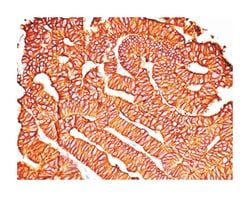
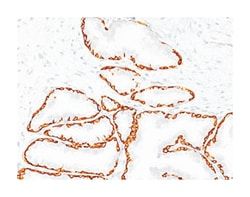
Flow Cytometry, Immunofluorescence, Immunohistochemistry, Immunoprecipitation, Western Blot
Clone
323/A3
Description
Mouse monoclonal antibody raised against EPCAM.
Formulation
In PBS, pH 7.4 (0.05% BSA, 0.05% sodium azide)
Gene Alias
17-1A/323/A3/CD326/CO-17A/CO17-1A/EGP/EGP-2/EGP34/EGP40/ESA/Ep-CAM/GA733-2/HEA125/KS1/4/KSA/M4S1/MH99/MIC18/MK-1/MOC31/TACST-1/TACSTD1/TROP1/hEGP-2
Host Species
Mouse
Purification Method
Protein A/G affinity chromatography
Regulatory Status
RUO
Gene ID (Entrez)
4072
Content And Storage
Store at 4°C.
Isotype
IgG1 κ
Related Products

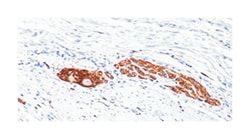
Description
- Description This gene encodes a carcinoma-associated antigen and is a member of a family that includes at least two type I membrane proteins
- This antigen is expressed on most normal epithelial cells and gastrointestinal carcinomas and functions as a homotypic calcium-independent cell adhesion molecule
- The antigen is being used as a target for immunotherapy treatment of human carcinomas
- Mutations in this gene result in congenital tufting enteropathy
- [provided by RefSeq