CCND1, Mouse, Clone: CY-D1, Abnova™
Manufacturer: Abnova Corporation
Select a Size
| Pack Size | SKU | Availability | Price |
|---|---|---|---|
| Each of 1 | 89-110-436-Each-of-1 | In Stock | ₹ 68,797.00 |
89-110-436 - Each of 1
In Stock
Quantity
1
Base Price: ₹ 68,797.00
GST (18%): ₹ 12,383.46
Total Price: ₹ 81,180.46
Antigen
CCND1
Classification
Monoclonal
Conjugate
Unconjugated
Dilution
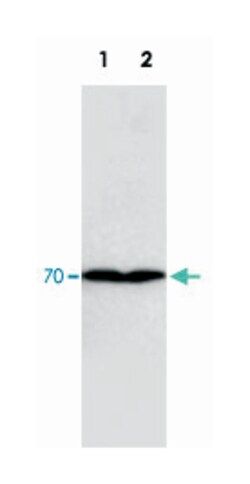
Western Blot (4 ug/mL) Immunohistochemistry (Formalin/PFA-fixed paraffin-embedded sections) (8 ug/mL) Immunohistochemistry (Frozen sections) (8 ug/mL) The optimal working dilution should be determined by the end user.
Gene
CCND1
Gene Symbols
CCND1
Immunogen
Recombinant protein corresponding to full length human CCND1.
Quantity
100 μg
Primary or Secondary
Primary
Target Species
Human
Form
Lyophilized
Applications
Immunocytochemistry, Immunohistochemistry (Frozen), Immunohistochemistry (PFA fixed), Western Blot
Clone
DCS-6
Description
Mouse monoclonal antibody raised against full length recombinant CCND1.
Formulation
Lyophilized from 1.2% sodium acetate (2mg BSA, 0.01mg sodium azide)
Gene Alias
BCL1/D11S287E/PRAD1/U21B31
Host Species
Mouse
Purification Method
Affinity purification
Regulatory Status
RUO
Gene ID (Entrez)
595
Content And Storage
Store at -20°C on dry atmosphere. After reconstitution with 1mL of 1.2% sodium acetate or neutral PBS to a concentration of 100μg/mL store at -20°C or lower. Aliquot to avoid repeated freezing and thawing.
Isotype
IgG2a
Related Products


Description
- The protein encoded by this gene belongs to the highly conserved cyclin family, whose members are characterized by a dramatic periodicity in protein abundance throughout the cell cycle
- Cyclins function as regulators of CDK kinases
- Different cyclins exhibit distinct expression and degradation patterns which contribute to the temporal coordination of each mitotic event
- This cyclin forms a complex with and functions as a regulatory subunit of CDK4 or CDK6, whose activity is required for cell cycle G1/S transition
- This protein has been shown to interact with tumor suppressor protein Rb and the expression of this gene is regulated positively by Rb
- Mutations, amplification and overexpression of this gene, which alters cell cycle progression, are observed frequently in a variety of tumors and may contribute to tumorigenesis
- [provided by RefSeq