89-114-566
ATF3 Rabbit anti-Human, Polyclonal Antibody, Abnova™
Manufacturer: Abnova Corporation
Select a Size
| Pack Size | SKU | Availability | Price |
|---|---|---|---|
| Each of 1 | 89-114-566-Each-of-1 | In Stock | ₹ 1,04,664.00 |
89-114-566 - Each of 1
In Stock
Quantity
1
Base Price: ₹ 1,04,664.00
GST (18%): ₹ 18,839.52
Total Price: ₹ 1,23,503.52
Antigen
ATF3
Classification
Polyclonal
Description
Rabbit polyclonal antibody raised against synthetic peptide of ATF3.
Formulation
In 20mM KH2PO4, 150mM NaCl, pH 7.2 (0.01% sodium azide)
Gene Symbols
ATF3
Immunogen
A synthetic peptide corresponding to amino acids 113-130 of human ATF3.
Regulatory Status
RUO
Gene ID (Entrez)
467
Content And Storage
Store at 4°C. For long term storage store at -20°C.Aliquot to avoid repeated freezing and thawing.
Applications
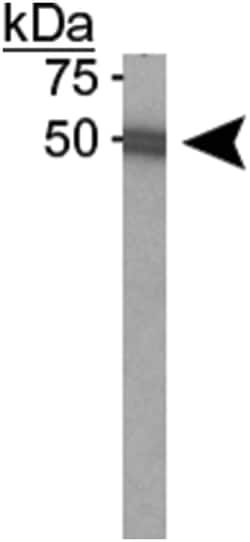
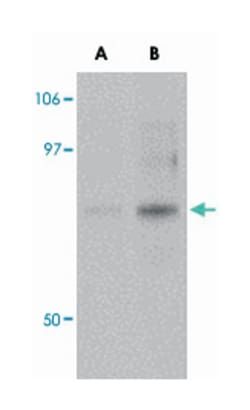
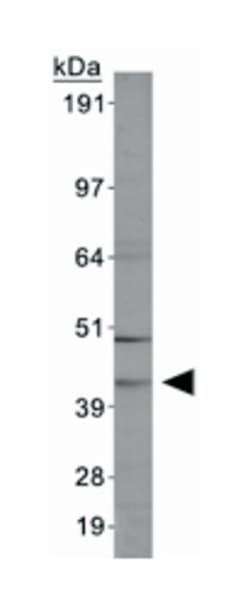
ELISA, Western Blot
Conjugate
Unconjugated
Dilution
ELISA (1:5000-1:20000) Western Blot (1:200) The optimal working dilution should be determined by the end user.
Gene
ATF3
Host Species
Rabbit
Quantity
100 μg
Primary or Secondary
Primary
Target Species
Human
Form
Liquid
Related Products


Description
- Activating transcription factor 3 is a member of the mammalian activation transcription factor/cAMP responsive element-binding (CREB) protein family of transcription factors
- Multiple transcript variants encoding two different isoforms have been found for this gene
- The longer isoform represses rather than activates transcription from promoters with ATF binding elements
- The shorter isoform (deltaZip2) lacks the leucine zipper protein-dimerization motif and does not bind to DNA, and it stimulates transcription presumably by sequestering inhibitory co-factors away from the promoter
- It is possible that alternative splicing of the ATF3 gene may be physiologically important in the regulation of target genes
- [provided by RefSeq