AURKB Rabbit anti-Bovine, Chimpanzee, Dog, Human, Mouse, Pig, Rat, Polyclonal Antibody, Abnova™
Manufacturer: Abnova Corporation
Select a Size
| Pack Size | SKU | Availability | Price |
|---|---|---|---|
| Each of 1 | 89-114-567-Each-of-1 | In Stock | ₹ 1,04,664.00 |
89-114-567 - Each of 1
In Stock
Quantity
1
Base Price: ₹ 1,04,664.00
GST (18%): ₹ 18,839.52
Total Price: ₹ 1,23,503.52
Antigen
AURKB
Classification
Polyclonal
Description
Rabbit polyclonal antibody raised against synthetic peptide of AURKB.
Formulation
In 20mM KH2PO4, 150mM NaCl, pH 7.2 (0.01% sodium azide)
Gene Accession No.
Q96GD4;NP_004208
Gene Symbols
AURKB
Immunogen
A synthetic peptide corresponding to amino acids 227-238 of human AURKB.
Regulatory Status
RUO
Gene ID (Entrez)
9212
Content And Storage
Store at 4°C. For long term storage store at -20°C.Aliquot to avoid repeated freezing and thawing.
Applications
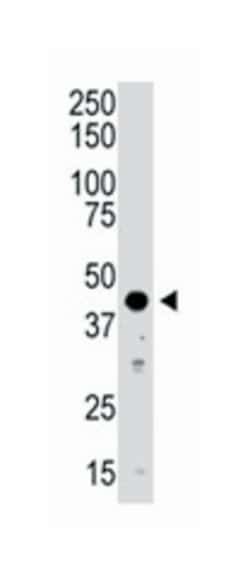
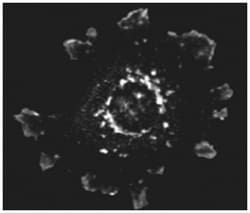
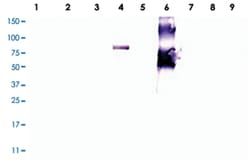
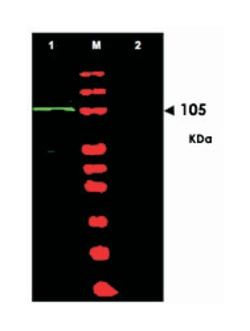
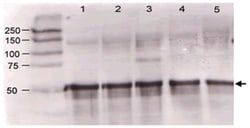
ELISA, Immunofluorescence, Western Blot
Conjugate
Unconjugated
Dilution
ELISA (1:5000-1:20000) Western Blot (1:500-1:2000) The optimal working dilution should be determined by the end user.
Gene
AURKB
Gene Alias
AIK2/AIM-1/AIM1/ARK2/AurB/IPL1/STK12/STK5
Host Species
Rabbit
Quantity
100 μg
Primary or Secondary
Primary
Target Species
Bovine, Canine, Chimpanzee, Human, Mouse, Porcine, Rat
Form
Liquid
Related Products

Description
- Chromosomal segregation during mitosis as well as meiosis is regulated by kinases and phosphatases
- The Aurora kinases associate with microtubules during chromosome movement and segregation
- Aurora kinase B localizes to microtubules near kinetochores, specifically to the specialized microtubules called K-fibers, and Aurora kinase A (MIM 603072) localizes to centrosomes (Lampson et al., 2004 [PubMed 14767480]).[supplied by OMIM