BIRC5 (phospho T34), Rabbit, Polyclonal Antibody, Abnova™
Manufacturer: Abnova Corporation
Select a Size
| Pack Size | SKU | Availability | Price |
|---|---|---|---|
| Each of 1 | 89-115-929-Each-of-1 | In Stock | ₹ 87,220.00 |
89-115-929 - Each of 1
In Stock
Quantity
1
Base Price: ₹ 87,220.00
GST (18%): ₹ 15,699.60
Total Price: ₹ 1,02,919.60
Antigen
BIRC5
Classification
Polyclonal
Description
Rabbit polyclonal antibody raised against synthetic phosphopeptide of BIRC5.
Formulation
In Tris-citrate/phosphate buffer, pH 7.0-8.0 (0.09% sodium azide)
Gene Alias
API4/EPR-1
Host Species
Rabbit
Quantity
100 μL
Primary or Secondary
Primary
Test Specificity
This antibody is specific to phosphorylated survivin.
Content And Storage
Store at 4°C. Do not freeze.
Applications
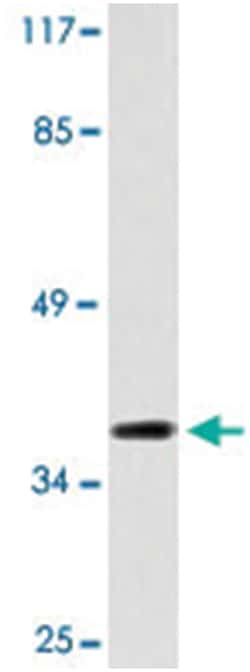
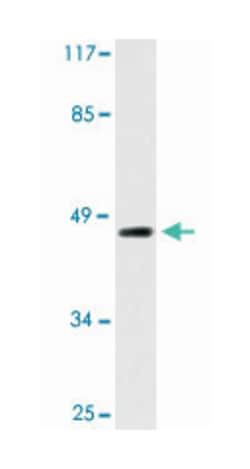
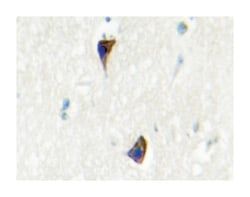
Immunocytochemistry, Immunofluorescence, Western Blot
Conjugate
Unconjugated
Dilution
Immunocytochemistry (1:50-1:200) Immunofluorescence (1:50-1:200) Western Blot (1:1000) The optimal working dilution should be determined by the end user.
Gene
BIRC5
Gene Symbols
BIRC5
Immunogen
Synthetic phosphopeptide corresponding to residues surrounding T34 of BIRC5.
Regulatory Status
RUO
Gene ID (Entrez)
332
Target Species
Bovine, Canine, Feline, Human, Mouse, Porcine, Primate
Form
Liquid
Related Products
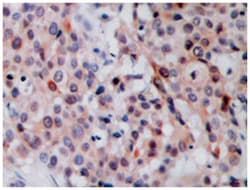
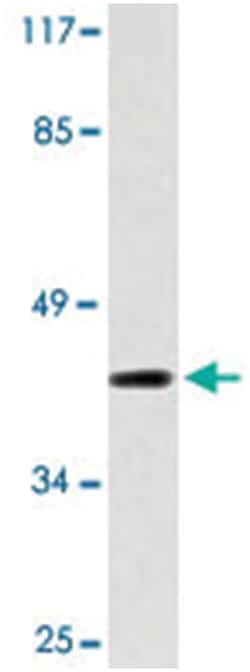

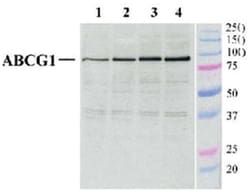
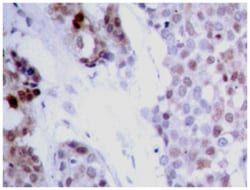
Description
- This gene is a member of the inhibitor of apoptosis (IAP) gene family, which encode negative regulatory proteins that prevent apoptotic cell death
- IAP family members usually contain multiple baculovirus IAP repeat (BIR) domains, but this gene encodes proteins with only a single BIR domain
- The encoded proteins also lack a C-terminus RING finger domain
- Gene expression is high during fetal development and in most tumors yet low in adult tissues
- Antisense transcripts are involved in the regulation of this gene's expression
- At least four transcript variants encoding distinct isoforms have been found for this gene, but the full-length natures of only three of them have been determined
- [provided by RefSeq]