BCL2 (phospho T56), Rabbit anti-Human, Polyclonal Antibody, Abnova™
Manufacturer: Abnova Corporation
Select a Size
| Pack Size | SKU | Availability | Price |
|---|---|---|---|
| Each of 1 | 89-126-713-Each-of-1 | In Stock | ₹ 87,220.00 |
89-126-713 - Each of 1
In Stock
Quantity
1
Base Price: ₹ 87,220.00
GST (18%): ₹ 15,699.60
Total Price: ₹ 1,02,919.60
Antigen
BCL2
Classification
Polyclonal
Conjugate
Unconjugated
Dilution
Western Blot (1:500-1:1000) Immunohistochemistry (1:50-1:200) Immunoprecipitation (1:50-1:200) Immunofluorescence (1:50-1:200) The optimal working dilution should be determined by the end user.
Gene
BCL2
Gene Symbols
BCL2
Immunogen
Synthetic phosphopeptide corresponding to residues surrounding T56 of BCL2.
Quantity
100 μL
Primary or Secondary
Primary
Target Species
Human
Form
Liquid
Applications
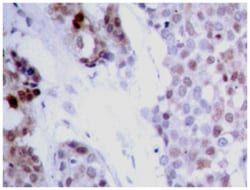
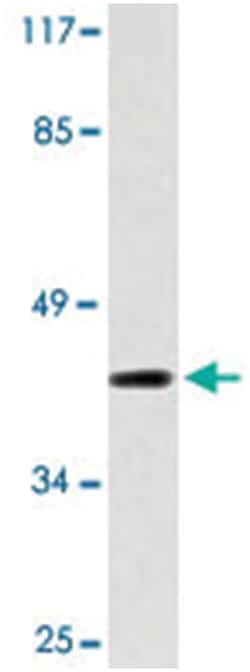
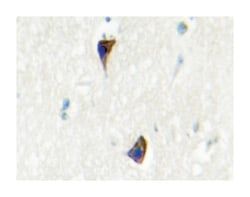
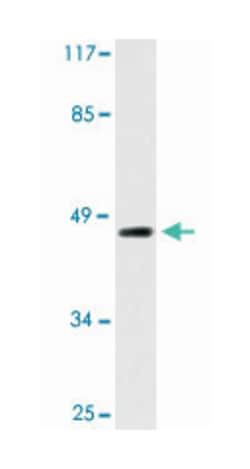
Immunofluorescence, Immunohistochemistry (PFA fixed), Immunoprecipitation, Western Blot
Concentration
1 mg/mL
Description
Rabbit polyclonal antibody raised against synthetic phosphopeptide of BCL2.
Formulation
In PBS, pH 7.2 (0.05% sodium azide)
Gene Alias
Bcl-2
Host Species
Rabbit
Purification Method
Antigen affinity purification
Regulatory Status
RUO
Gene ID (Entrez)
596
Content And Storage
Store at 4°C. For long term storage store at -20°C.Aliquot to avoid repeated freezing and thawing.
Related Products
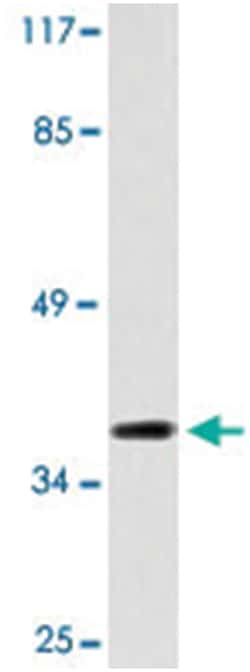
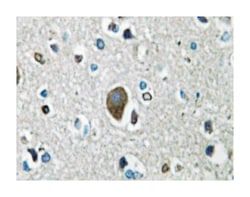
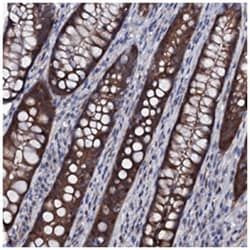
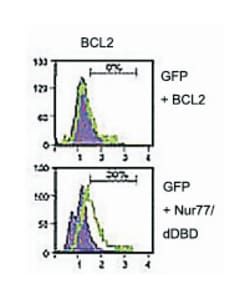
Description
- This gene encodes an integral outer mitochondrial membrane protein that blocks the apoptotic death of some cells such as lymphocytes
- Constitutive expression of BCL2, such as in the case of translocation of BCL2 to Ig heavy chain locus, is thought to be the cause of follicular lymphoma
- Two transcript variants, produced by alternate splicing, differ in their C-terminal ends
- [provided by RefSeq